- Home
- Cold-Hardy
- Sedum
- Sedum middendorfianus var. striatus
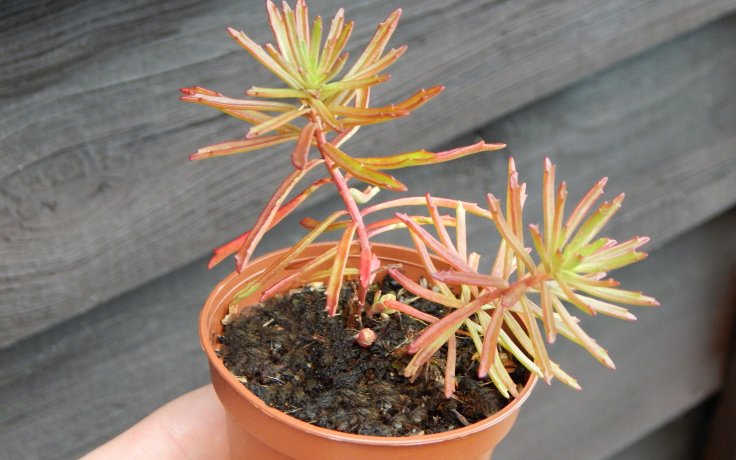
Sedum middendorfianus var. striatus
The plant likes full sun. It is suitable for rock gardens or portable containers.
Water the plant in a pot after the substrate has dried out. When placed in a rock garden, water as needed.
The plant is frost-resistant and can withstand temperatures down to -34.4 °C.
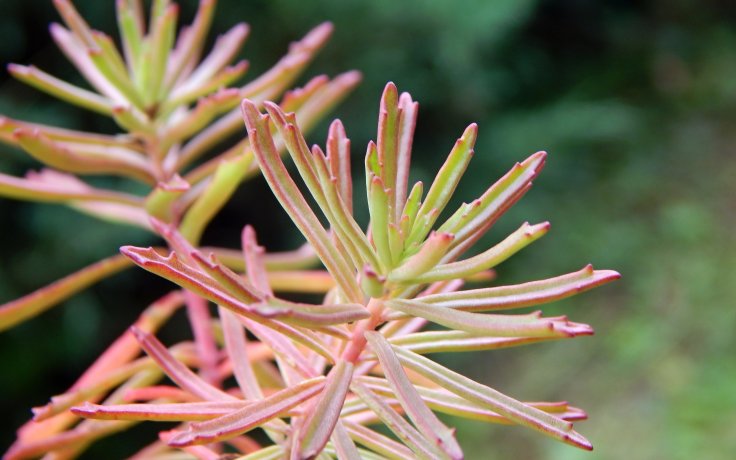
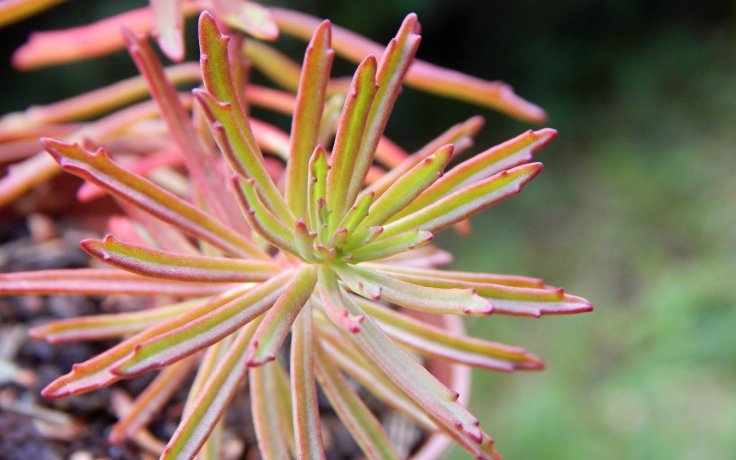
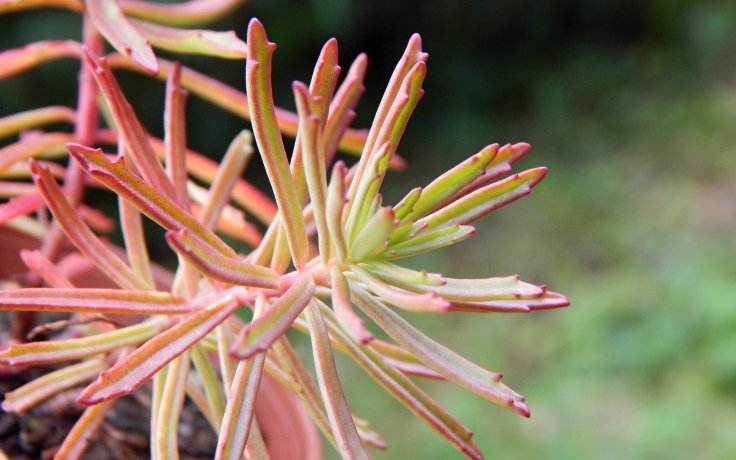
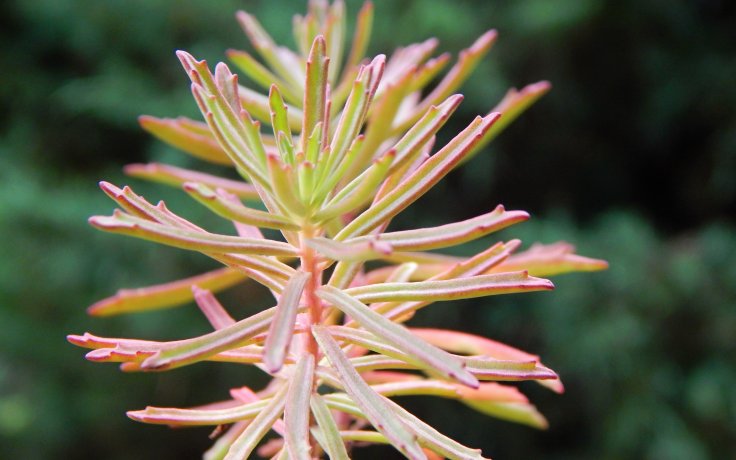
The adjective striatus means grooved and refers to the narrow, longitudinally grooved leaves of this unusual form.
Sedum middendorfianus var. striatus, botanically listed as Phedimus middendorfianus var. striatus, is a frost-hardy rock garden succulent known as Middendorff’s stonecrop. The variety striatus is a narrow-leaved form of this species. The epithet middendorfianus honours Alexander Theodor von Middendorff, a zoologist and explorer, while striatus means “grooved” or “striped”, referring to the characteristic longitudinal ridges on the leaves. This species is native to China, Japan, Korea, and Russia, where it grows in rocky crevices and stony forest soils.
The plant produces numerous upright to ascending stems that branch from the base and form small clumps reaching about 20 cm in height. The leaves are narrow, with a distinct longitudinal groove and a finely toothed margin in the upper part. They are green with reddish to brownish-purple tones along the edges, and in full sun the foliage may develop deeper dark red colouring.
The flowers are star-shaped, yellow, and marked by bright orange anthers. They appear in summer in clustered groups at the ends of the stems, adding a strong seasonal highlight to outdoor plantings.
In winter, the above-ground parts often dry back, leaving small leaf “buds” close to the ground that resprout again in spring. Sedum middendorfianus var. striatus is well suited for rock gardens, perennial beds, dry stone walls, and gaps between stones, and it also performs well in containers. Thanks to its narrow foliage, seasonal colour changes, and vivid summer flowering, it is an excellent choice for anyone looking for a less common yet reliable outdoor stonecrop.