- Home
- Succulents
- Schizobasis
- Schizobasis intricata
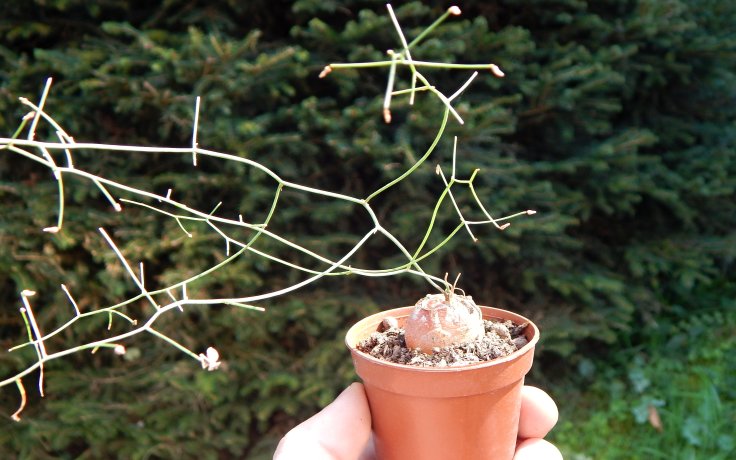
Schizobasis intricata
The plant likes sunny locations, but can also tolerate partial shade.
Always water a few days after the substrate has dried out. Do not water when the plant has no leaves.
The plant is not frost-resistant.
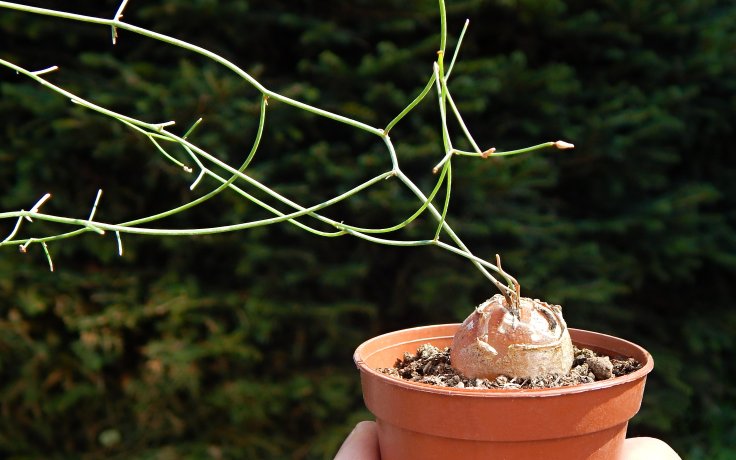
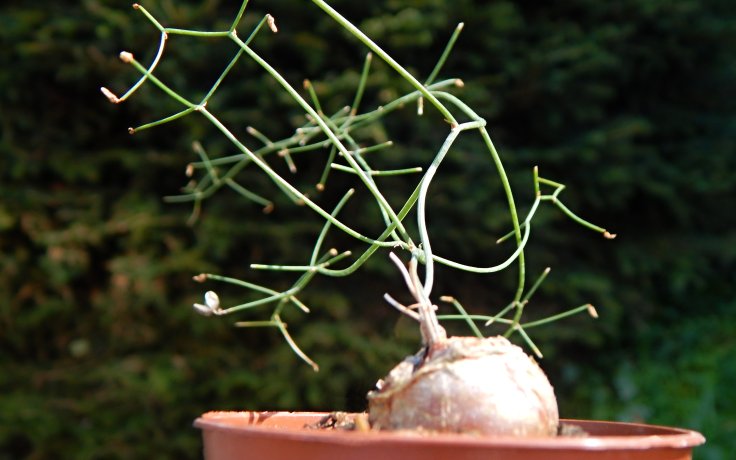
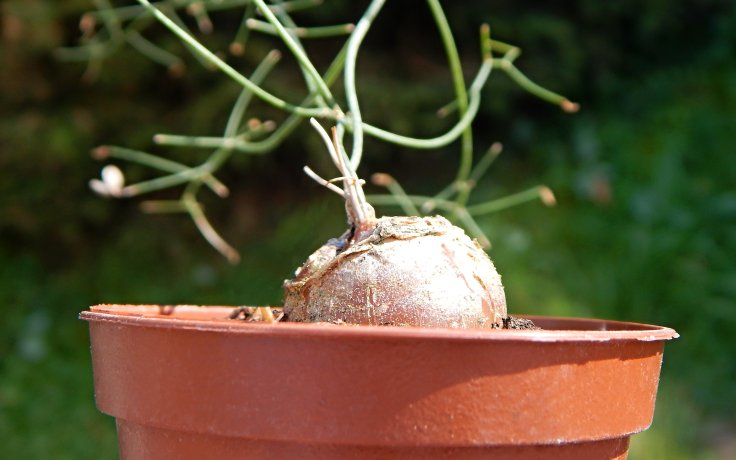
The plant produces dense, right-angled branched stems that dry out during drought.
Schizobasis intricata belongs to the Hyacinthaceae family, together with better-known genera such as Albuca, Drimia, and Hyacinthus. It is also listed under the synonyms Drimia intricata and Anthericum intricatum, and is commonly called the Climbing onion. The genus name comes from the Greek words schizein (to split) and basis (base), referring to the way the seed capsules open, while the species name intricata means “tangled” in Latin. It is an African bulb plant found in well-drained rocky habitats on flat rocks and in rock crevices, at elevations ranging from 250 to 3540 meters.
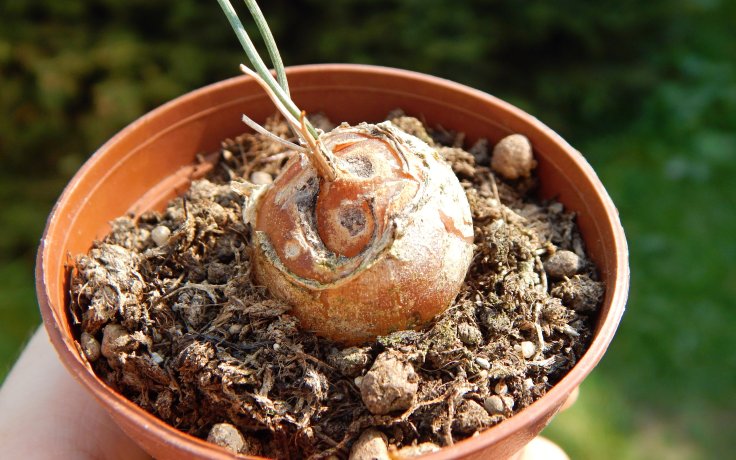
The plant produces upright stems that can reach up to 50 cm in length and branch strongly at right angles. The mature bulb is pale green to brownish, half buried in the soil, with a white outer skin. Over time, the plant may form a small dome of clustered bulbs.
The flowers are white to pale yellow, rather inconspicuous, and appear in summer. A notable feature is that they tend to open mainly at night.
During active growth, Schizobasis intricata needs regular watering, allowing the soil to dry slightly before the next watering. After flowering, when the stem dries out in summer, watering should be gradually reduced to prevent the bulbs from rotting. Watering is resumed again in late winter or spring when new growth begins, making this unusual species an interesting choice for collectors of bulbous plants similar to Bowiea volubilis.