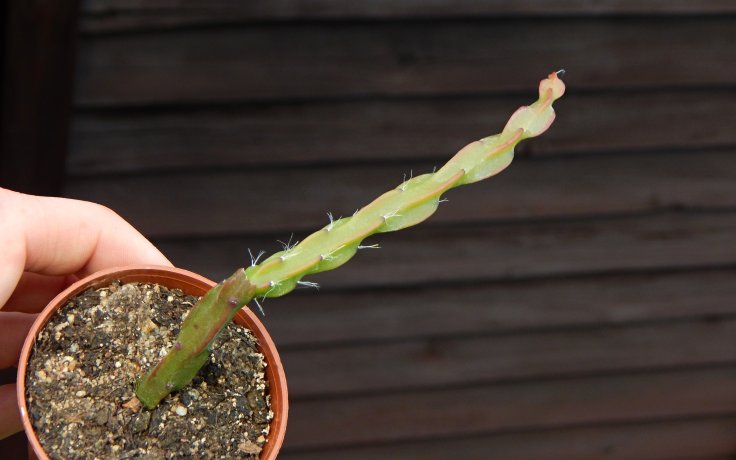
Rhipsalis paradoxa
Partial shade is ideal for this plant.
Always water a few days after the substrate has dried out. You can water more often if necessary.
It can withstand temperatures as low as -1.1 °C for short periods. The plant is not frost-resistant.
The species name paradoxa means “remarkable” or “paradoxical.” It refers to the plant’s unusual appearance, which differs considerably from that of the commonly known upright-growing cacti.
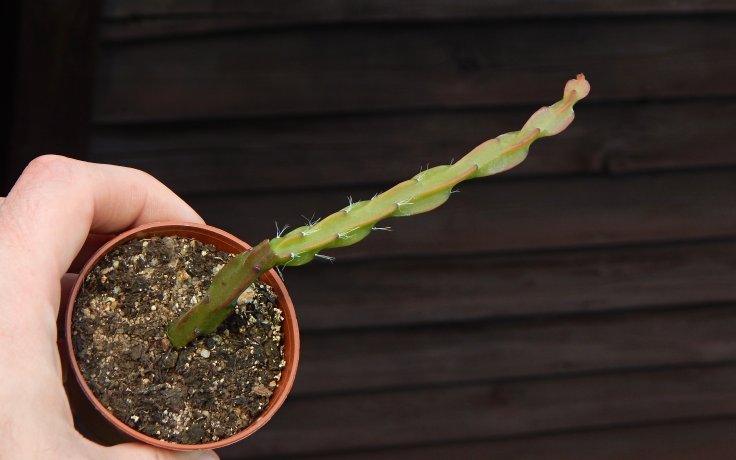
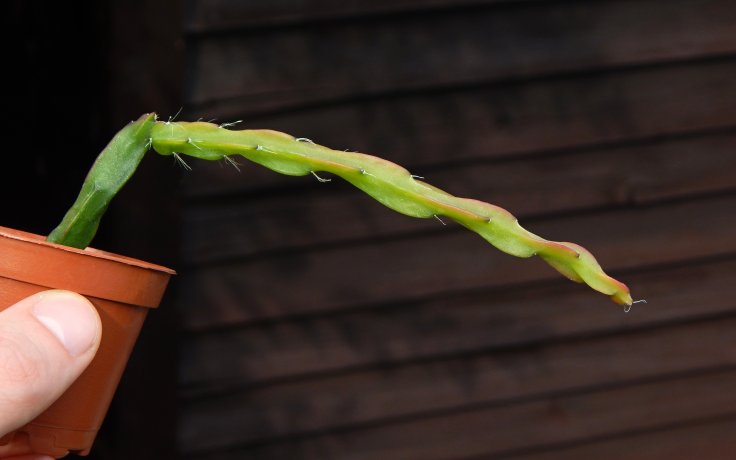
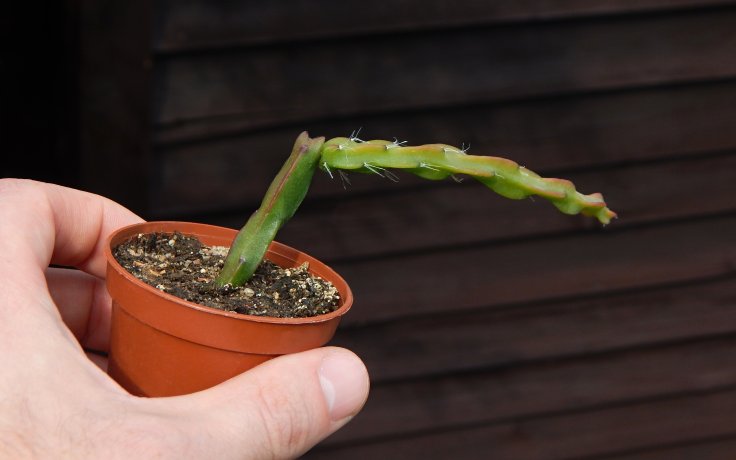
Rhipsalis paradoxa is an epiphytic cactus from the Cactaceae family, native to southeastern and southern Brazil. In nature, it grows mainly on trees in seasonally dry tropical forests. It produces long, trailing stems and looks particularly attractive when grown in a hanging container.
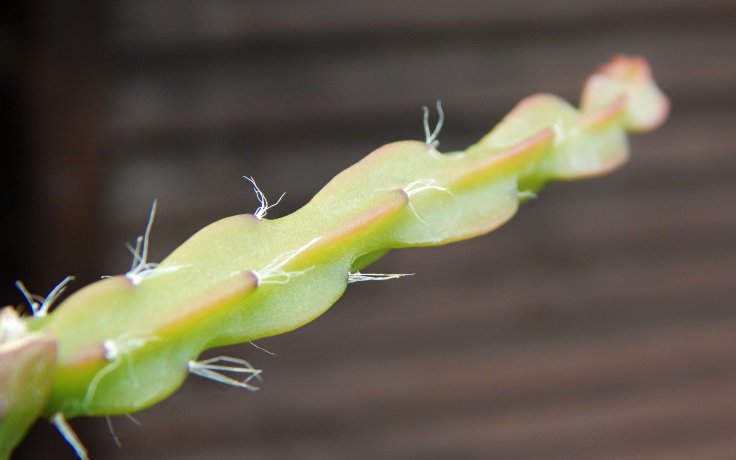
Its stems are segmented, branched and distinctly angular, often appearing three-sided. The individual segments grow in an alternating arrangement, giving the plant the appearance of a chain or a tangle of slender cords. The young stems are bright green and gradually form dense, trailing clusters that can reach several metres in length.
Small white flowers appear near the ends and along the upper parts of the stems. Mature plants can flower quite freely, and small berry-like fruits may develop after flowering.
Rhipsalis paradoxa prefers a bright position with indirect light or partial shade. Strong midday sun may damage its delicate stems. Grow it in a well-drained epiphytic cactus mix, water moderately during the growing season and allow the substrate to dry slightly between waterings. Higher humidity and a sheltered position away from drafts are beneficial.