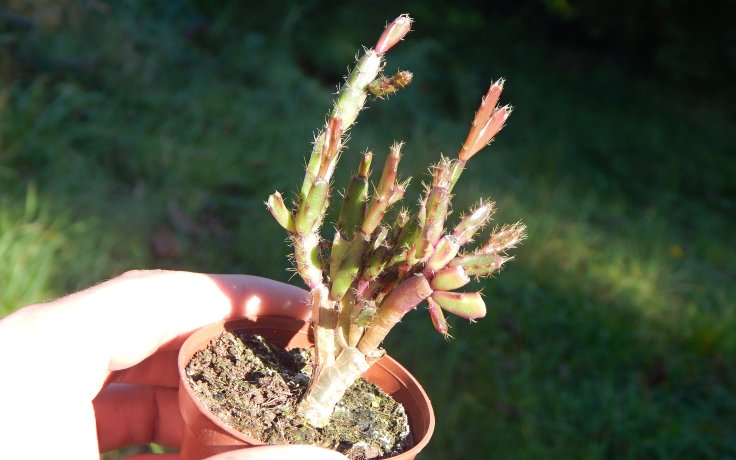
Rhipsalidopsis rosea
A sunny location is ideal for this plant, but it can also tolerate partial shade.
Always water a few days after the substrate has dried out. Reduce watering in winter.
It can tolerate temperatures as low as -1.1 °C for short periods. However, the plant is not frost-resistant.
It grows as an epiphyte in misty forests on araucaria trees and faces habitat loss and human harvesting in the wild.
Rhipsalidopsis rosea (currently accepted under the name Hatiora rosea) is a rare epiphytic cactus native to Brazil. It is known from only a limited number of localities, approximately ten sites, with a total distribution area of around 2,000 km². In nature, it grows in mist forests at elevations between 1,000 and 2,000 meters, most often as an epiphyte on araucaria trees.
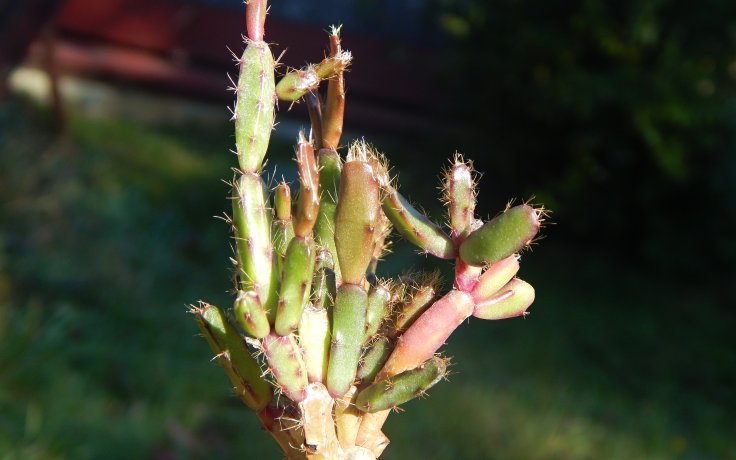
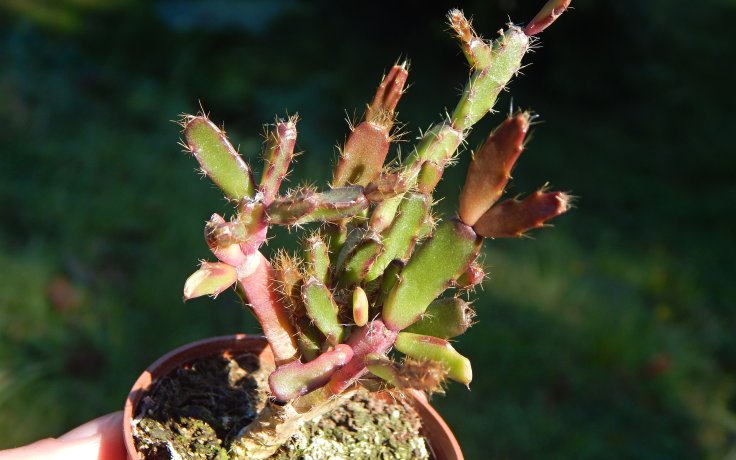
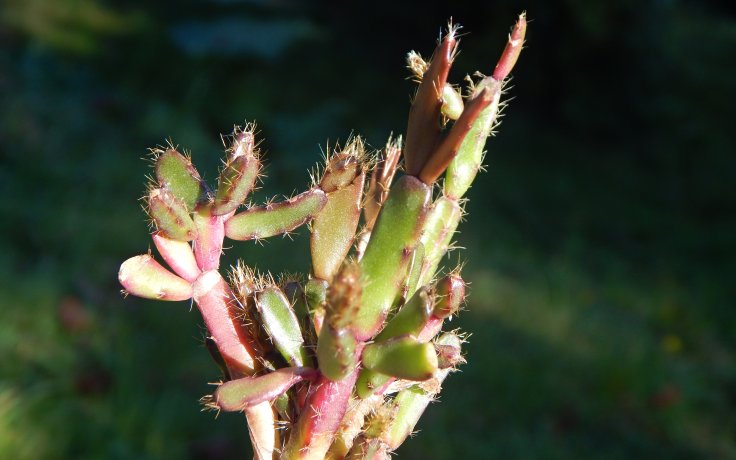
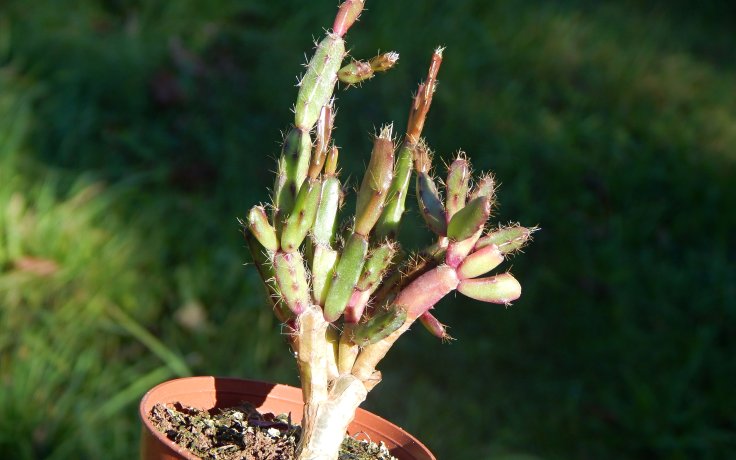
The plant has segmented stems, often with a subtle reddish tint and a few fine bristles. For a long time, the growth remains predominantly upright, forming a small, compact shrub rather than trailing shoots.
The flowers appear at the ends of the segments. They are pink, delicately fragrant, and smaller than those of the common Easter cactus. Flowering usually takes place in spring.
Rhipsalidopsis rosea is somewhat similar to the Easter cactus but differs in its smaller segments and flowers. It is a relatively resilient species, well suited for growers looking for a less common, naturally occurring epiphytic cactus to add to their collection.