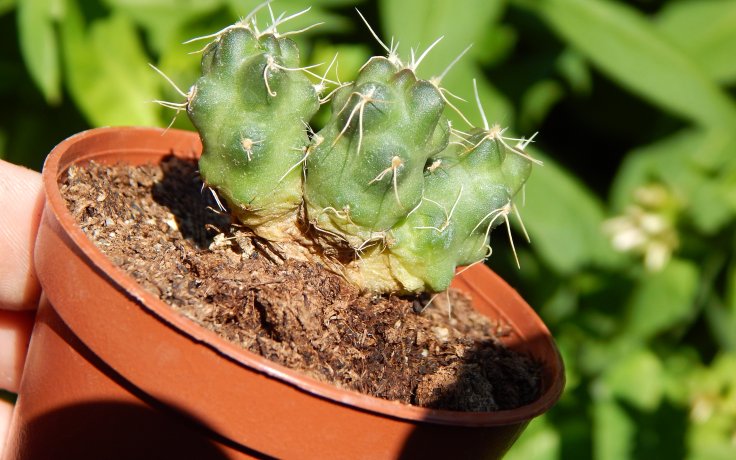
Puna incahuasi
Sunny location is ideal for this plant, but it can also tolerate partial shade.
Always water a few days after the substrate has dried out. Reduce watering in winter.
It can withstand temperatures as low as -3.9 °C for short periods. However, the plant is not frost-resistant.
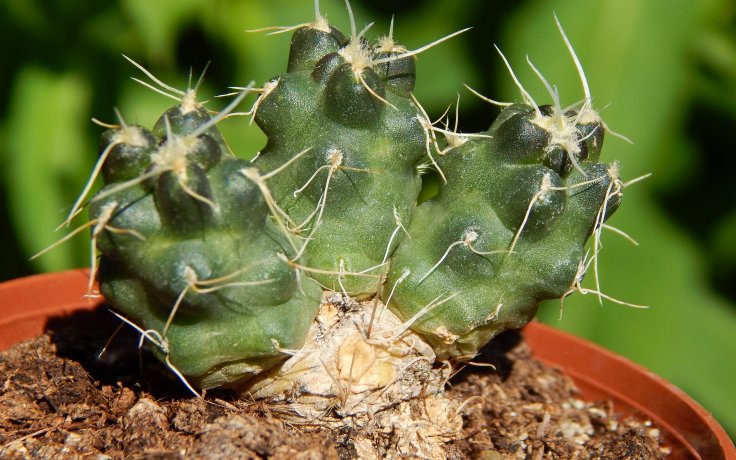
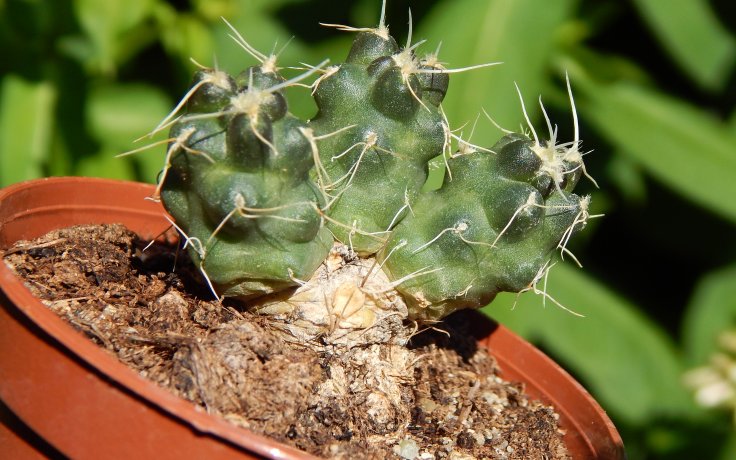
Puna incahuasi produces a distinctly tuberous root that remains partially embedded in the substrate, with only about a centimeter protruding above the surface.
Puna incahuasi is a mountain cactus originally described as Tephrocactus pulcherrimus and also known as Maihueniopsis subterranea subsp. pulcherrima. In nature, it occurs in Bolivia, where it grows at elevations of approximately 2,800–3,200 meters above sea level. Its natural habitat consists of dry, high-altitude areas with pronounced temperature differences between day and night.
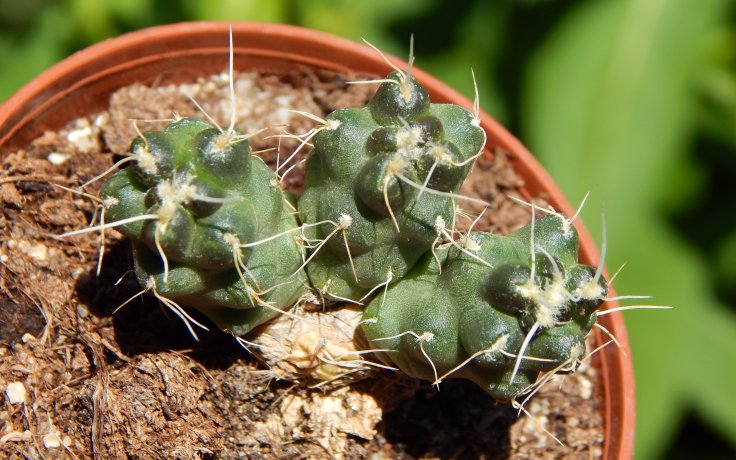
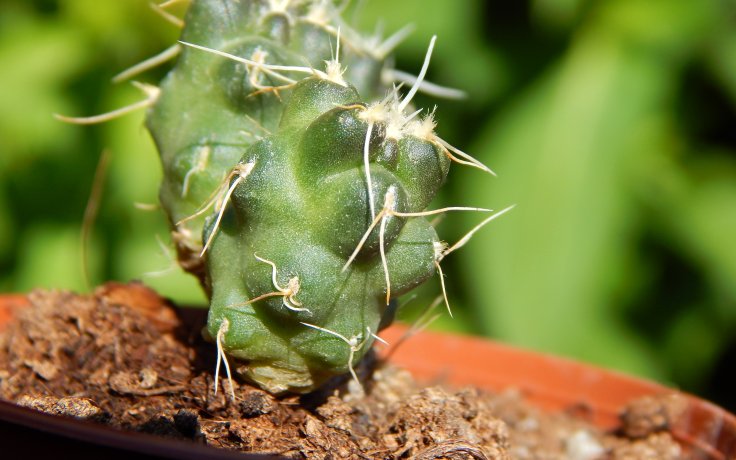
The plant forms grey-green to green, relatively slender stems that grow in dense clumps. Leaves are very small and fall off early. A characteristic feature is the deep, tuberous root system, with only a short portion of the plant emerging above the soil surface, usually just 1–3 cm.
The flowers are very striking, reaching about 4–6 cm in diameter and showing dark pink, reddish purple to purple coloration. They open during the daytime, with flowering taking place in summer.
For cultivation, a very well-draining substrate is essential, along with a deep container that allows proper development of the elongated root. This mountain cactus tolerates cold well if kept dry and requires a cool position during winter dormancy. Puna incahuasi is a distinctive succulent suited to growers who can provide dry winter conditions.