- Home
- Succulents
- Pelargonium
- Pelargonium gibbosum (Caudex)
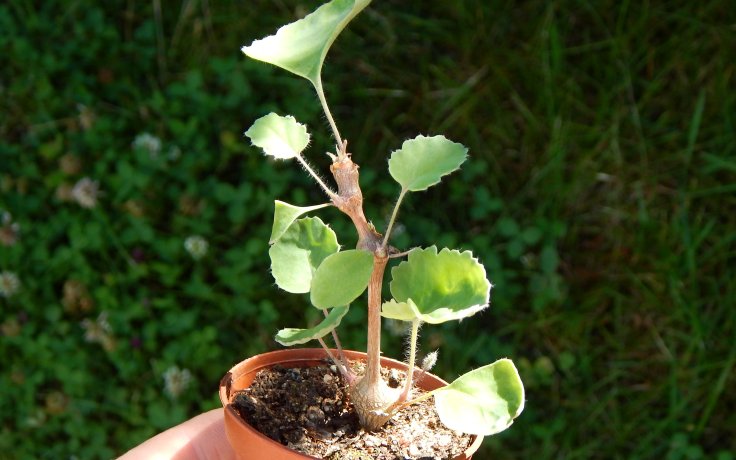
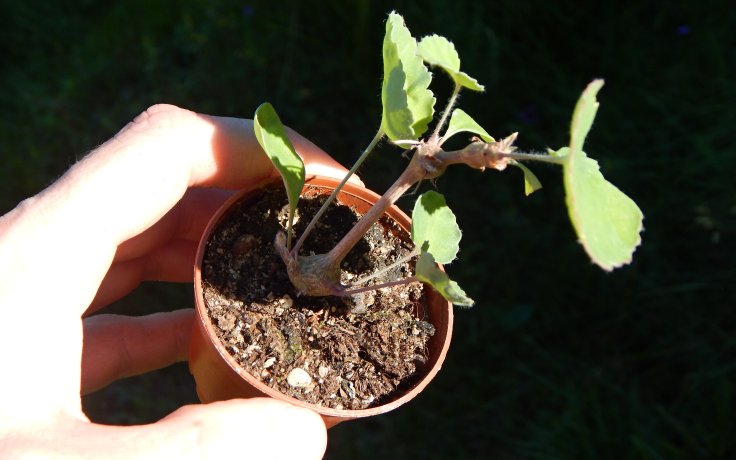
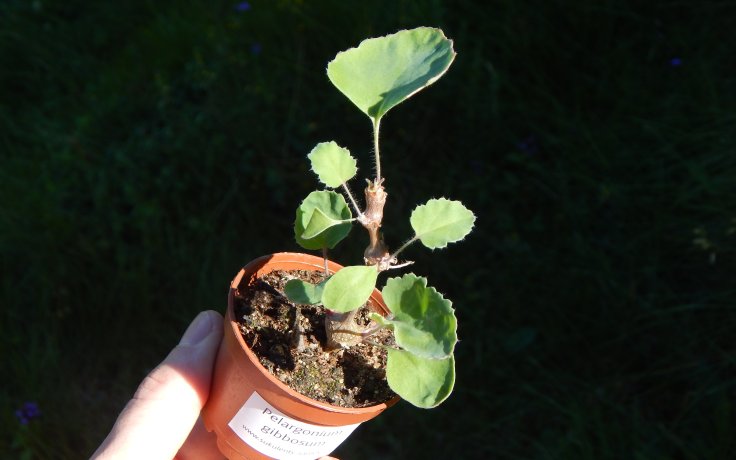
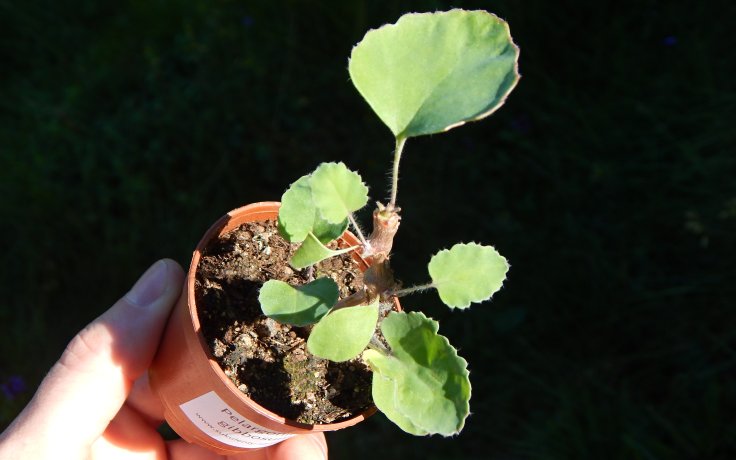
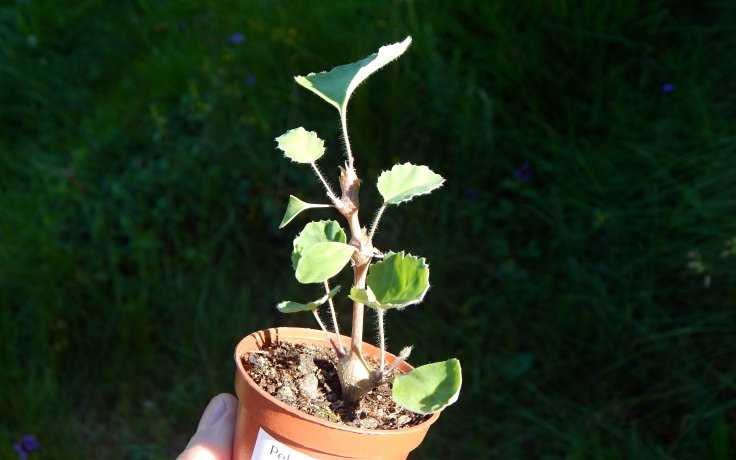
Pelargonium gibbosum (Caudex)
Place in a sunny location, although it also tolerates partial shade.
Water only a few days after the substrate has completely dried out. Reduce watering during winter.
It can briefly tolerate temperatures down to -1.1 °C, but it is not frost hardy.
The swollen joints of the stems act as water reservoirs, helping the plant survive extended periods of drought.
Pelargonium gibbosum is an unusual caudiciform species native to the coastal regions of South Africa. In the wild, it grows on rocky slopes and in sandy soils, where it has adapted to long periods of drought. The species name gibbosum refers to its conspicuously swollen stem joints, which serve as water storage organs.
The plant develops a thickened caudex and fleshy, irregularly swollen branches with characteristic knobby joints. At the tips of the branches, it produces light green, softly hairy leaves with shallowly lobed to gently wavy margins. It typically grows to 30–60 cm in height and gradually develops an attractive, bonsai-like appearance.
In autumn and winter, it produces clusters of small yellowish-green flowers marked with deep maroon patterns. The flowers are strongly fragrant, especially in the evening, when their sweet scent attracts nocturnal pollinators.
Pelargonium gibbosum requires a very well-draining substrate, plenty of light, and moderate watering. It grows most actively during the cooler months, while in summer it often enters partial dormancy and should be watered only sparingly. Thanks to its caudex and uniquely swollen branches, it is one of the most distinctive botanical pelargoniums.