- Home
- Cold-Hardy
- Orostachys
- Orostachys spinosus Silver
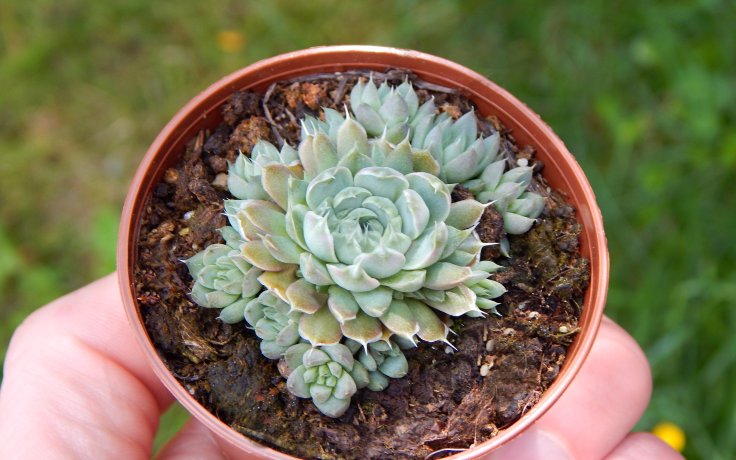
Orostachys spinosus Silver
A sunny location is ideal for the plant.
Always water a few days after the substrate has dried out. Do not water in winter.
Frost-resistant succulent, reportedly withstands temperatures as low as -34.4 °C.
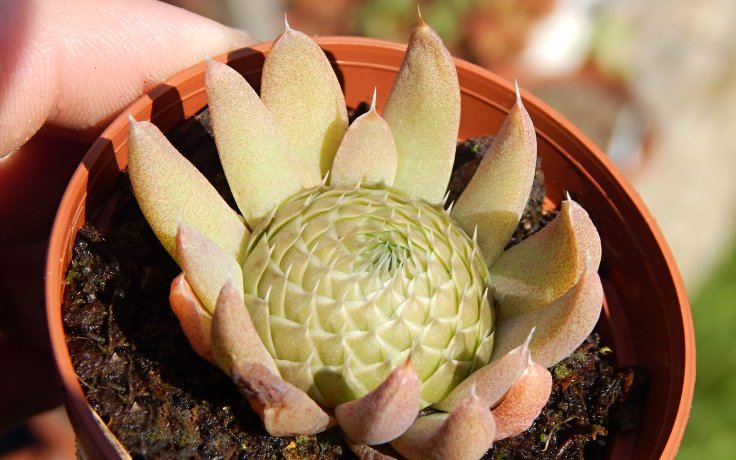
During winter, reduce watering and allow the substrate to dry out almost completely — the rosettes naturally shrink in size.
Orostachys spinosus Silver is a frost-hardy succulent native to Central and East Asia, originally occurring in regions of Kazakhstan, Russia, Mongolia, and China. This species is a slow-growing rock garden plant forming small, compact rosettes of fleshy leaves.
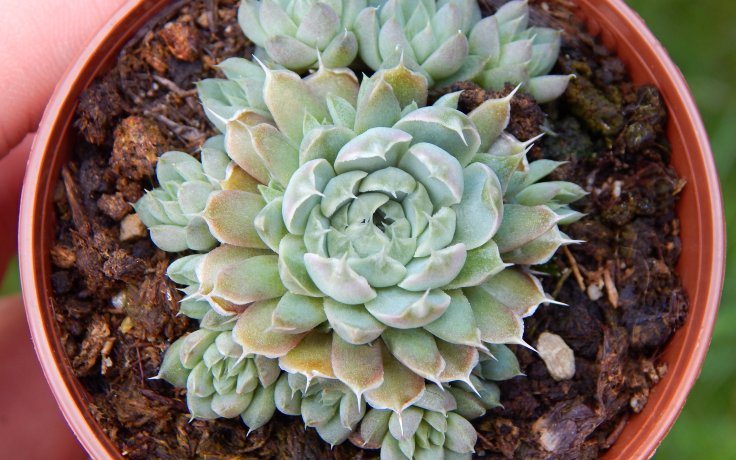
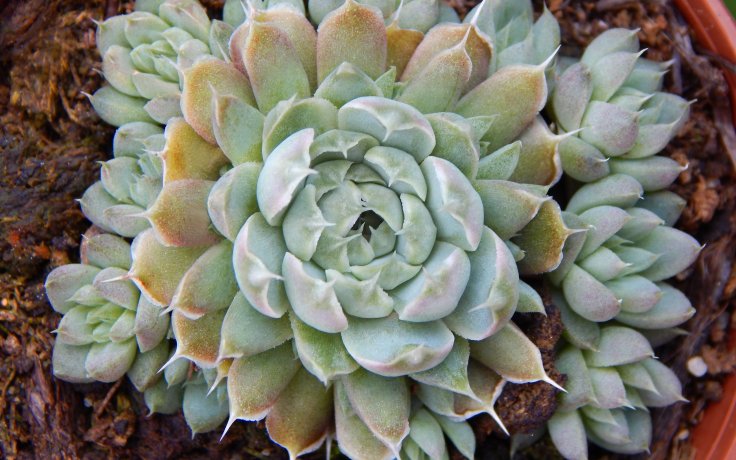
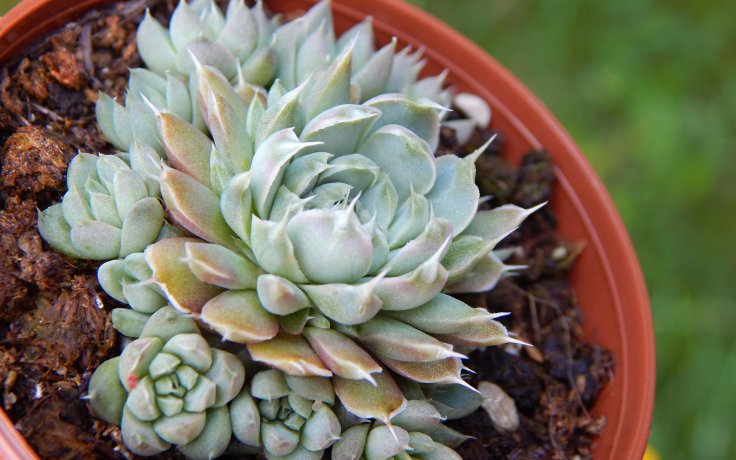
The plant produces rosettes of thick, distinctly silvery leaves, which may develop subtle grey-green to slightly reddish tones during the season. The leaves end in soft spiny tips that often fade to a whitish colour. Individual rosettes reach around 6 cm in diameter, and the plant forms numerous offsets, gradually spreading into wider clumps.
Flowering occurs on an upright stem bearing small, pale-coloured flowers arranged in a dense, spike-like inflorescence typical of the genus. Orostachys is a monocarpic plant, meaning the main rosette dies after flowering, but it usually produces many offsets beforehand to ensure continued growth of the clump.
This is a highly resilient succulent suitable for rock gardens, portable containers, and dry, stony sites. It thrives best in well-drained soil with minimal watering — in garden conditions it should only be watered during extended drought. It tolerates Central European winters outdoors without difficulty, but it is essential not to water the plant during the cold season. In winter, the rosettes contract into tight spherical forms as a natural protection against frost, reopening again in spring. Thanks to its strong resistance to pests and diseases, it is well suited even to harsh conditions with very little care.