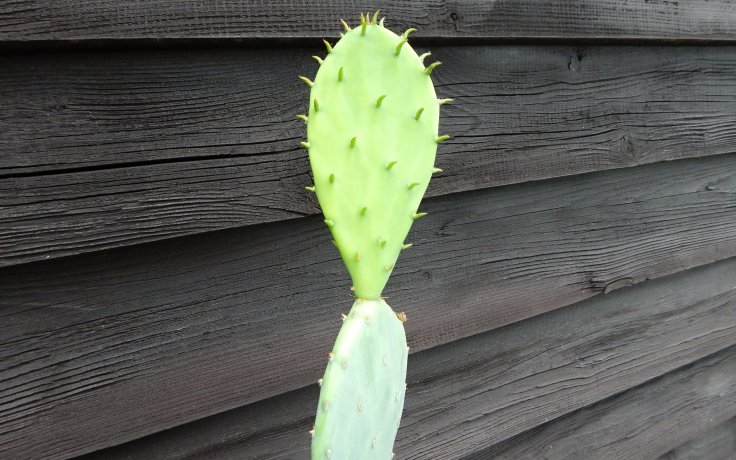
Opuntia humifusa
Ideally, place in a sunny location or in a place with diffused light.
Always water a few days after the substrate has dried out. Do not water in winter.
Short-term temperatures as low as -31.7 °C. The plant is partially frost-resistant.
If it is to be frost-resistant, it must be kept completely dry during the winter.
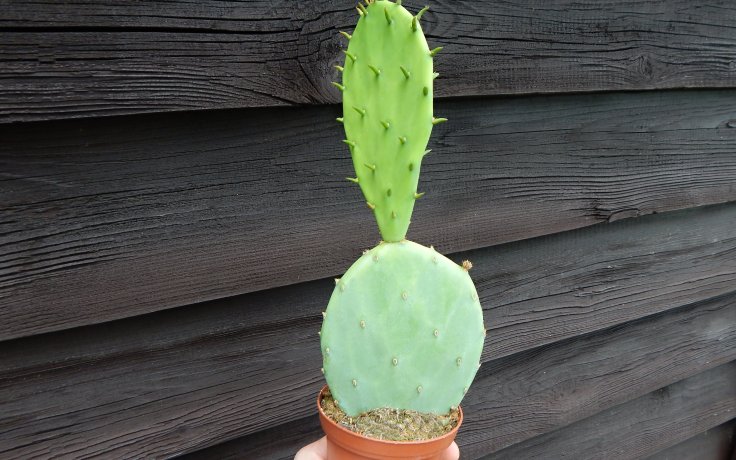
Opuntia humifusa, also known as the Eastern Prickly Pear, Devil’s Tongue, or Low Prickly Pear, is one of the more cold-hardy prickly pear cacti native to North America. Its natural range extends along the eastern coast of the United States and further inland, where it grows in open sandy soils, rocky slopes, and coastal scrub habitats. It is sometimes listed under the synonym Opuntia vulgaris, reflecting the high variability within the genus Opuntia.
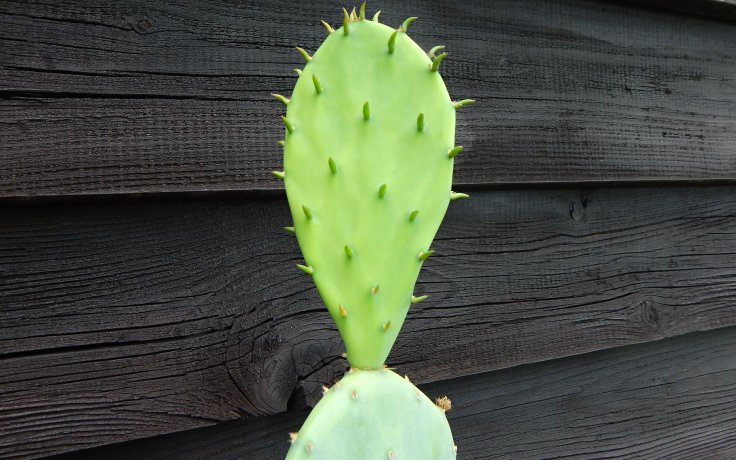
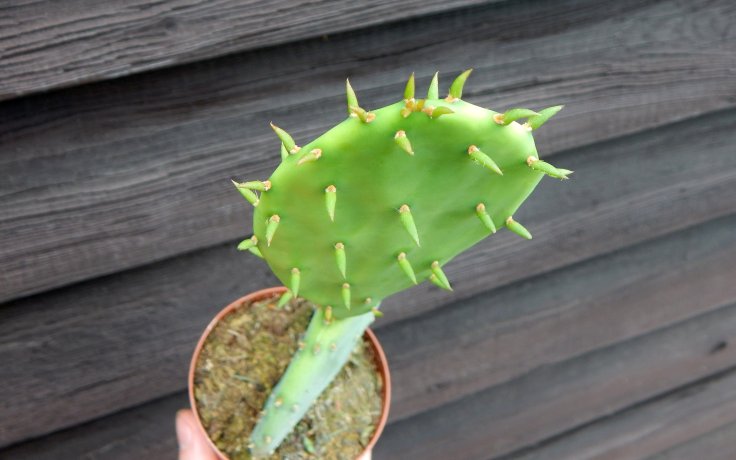
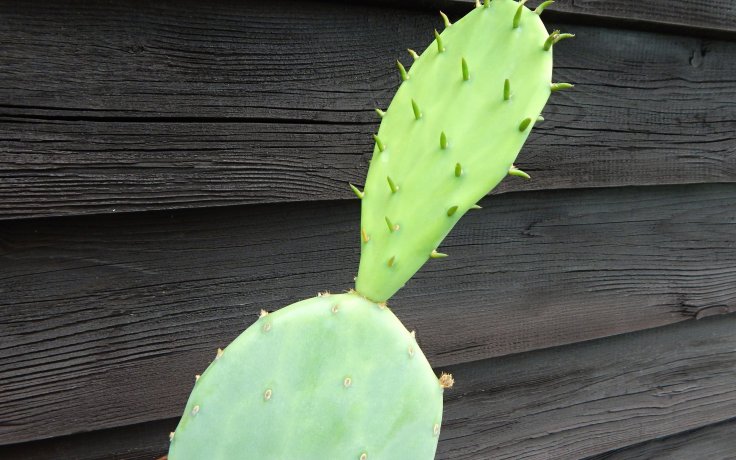
The plant forms flattened, dark to glossy green pads that are fleshy and may reach up to about 17.5 cm in length and around 12 cm in width. The surface carries dense clusters of small yellow to reddish-brown glochids. Pads are often nearly spineless, though one or two longer spines may occasionally appear. Mature plants can develop into large, impressive clumps over time.
The flowers are bright yellow, often with an orange or reddish centre, and appear in late spring along the edges of mature pads. After flowering, edible fruits develop, changing from green to red or purple as they ripen, and they may remain on the plant until the following spring.
Opuntia humifusa is best suited for a sunny, sheltered, and very well-drained position. Although it belongs among the more frost-tolerant opuntias, container cultivation is often safer in colder climates, allowing the plant to overwinter in dry and cool conditions. Thanks to its strong growth, large pads, and striking flowering, it is an excellent choice for anyone looking to grow an impressive prickly pear cactus outside warm regions.