- Home
- Cold-Hardy
- Opuntia
- Opuntia erinacea var. utahensis
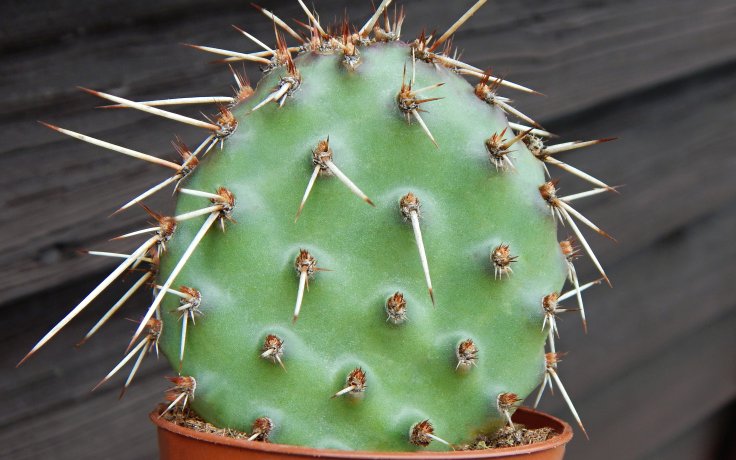
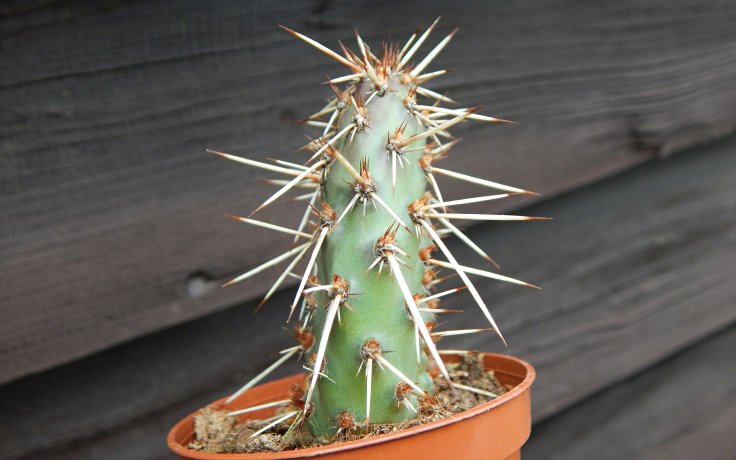
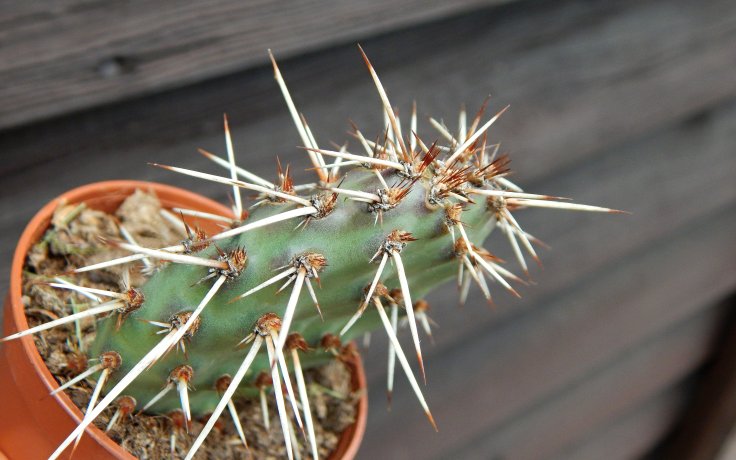
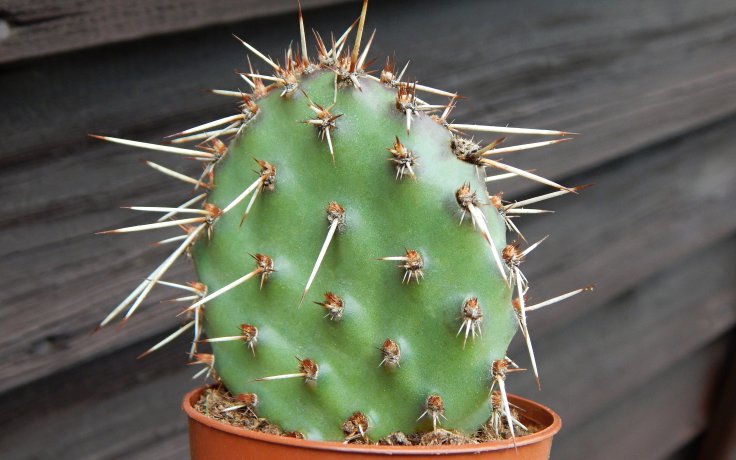
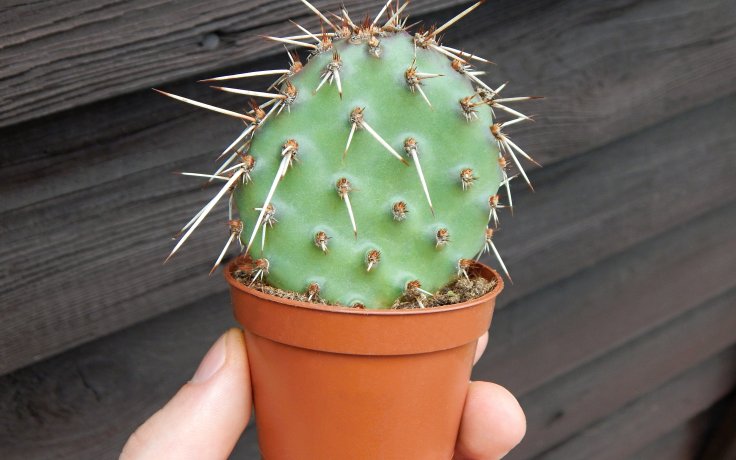
Opuntia erinacea var. utahensis
The plant likes full sun, but can also tolerate partial shade. It is suitable for rock gardens or portable containers.
Water the plant in the pot after the substrate has dried out. Do not water in winter.
The plant is frost-resistant and can withstand temperatures down to -25 °C.
Prickly pears originate from the Great Basin and the Mojave Desert, areas known for significant temperature differences, unexpected rainfall, and occasional frosts with snow.
Opuntia erinacea var. utahensis, also known under the synonym Opuntia utahensis and commonly referred to as the Mojave prickly pear, originates from the southwestern United States. It is distributed throughout the Mojave Desert and extends into the southern part of the Great Basin region. As the name utahensis suggests, it is especially common in Utah, where it inhabits dry areas, rocky slopes, and desert plains.
The plant has a densely branched, shrub-like growth habit and can reach a height of up to about 80 cm. The pads are flattened and obovate in shape, usually measuring 5–10 cm in length. Areoles carry 1–8 spines that are white to greyish or light brown, with the longest spines reaching up to about 4 cm.
Flowering occurs from May to July. The flowers are pink to red, showy, and can reach up to about 6 cm in diameter. After flowering, green to yellow-green fruits develop; they are dry, spiny, and grow up to around 3 cm long.
Opuntia erinacea var. utahensis can be successfully overwintered outdoors under Central European conditions and performs well in rock gardens. It is also suitable for outdoor bowls or stone troughs, always planted in a very well-drained substrate. Thanks to its high resilience and low maintenance requirements, it is an excellent choice for anyone looking for a reliable outdoor prickly pear with striking flowers.