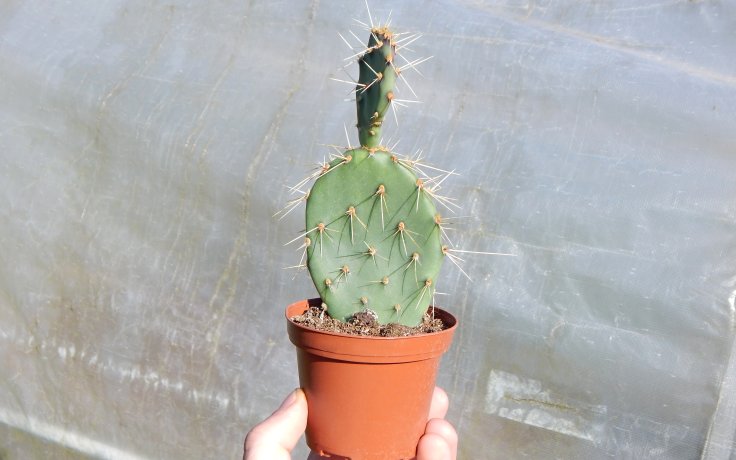
Opuntia engelmannii
Ideally, place in a sunny location or in a place with diffused light.
Always water a few days after the substrate has dried out. Do not water in winter.
The cactus can withstand temperatures as low as -12.2 °C for short periods. However, the plant is not fully frost-resistant.
It belongs to the prickly pear cacti, which are partially frost-resistant and can withstand short-term frosts.
Opuntia engelmannii, commonly known as Engelmann’s prickly pear, is a cactus species native to arid regions of North America. The species epithet engelmannii honors George Engelmann (1809–1884), a German-American botanist who made significant contributions to the study of North American plants. In the wild, this succulent typically grows in dry grasslands and semi-desert habitats.
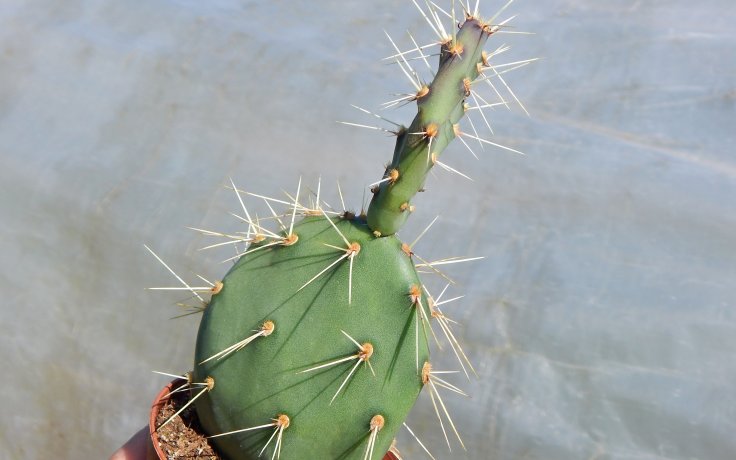
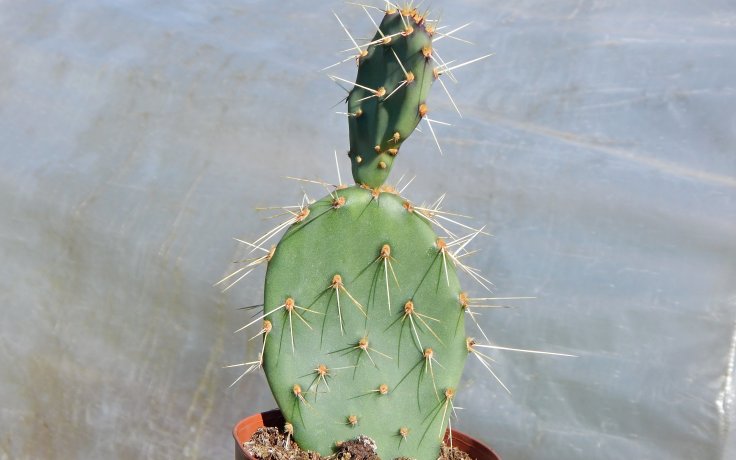
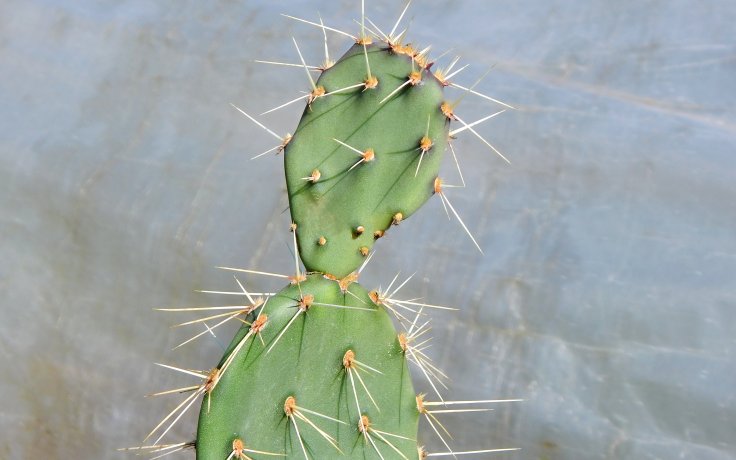
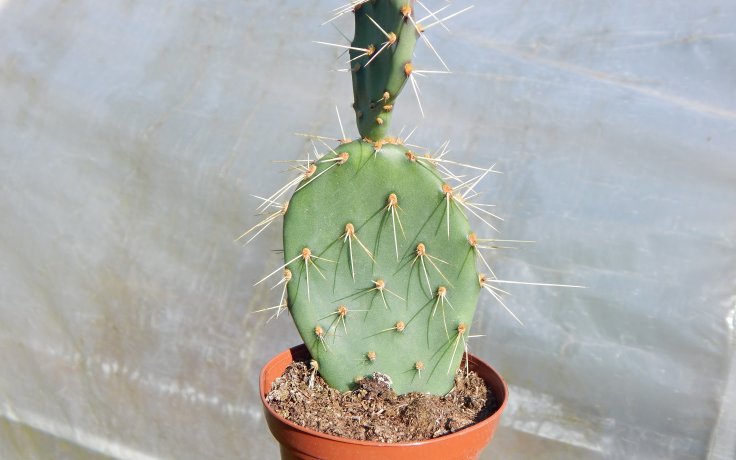
The plant develops a shrubby to tree-like growth habit. It is composed of segmented, flat pads that are yellow-green to blue-green in color. The surface of the pads bears areoles with clusters of glochids and usually one to four firm spines. Overall, the plant has a robust appearance typical of larger prickly pears.
Flowers appear in spring and emerge from the edges of the pads. They are showy, most often yellow, but may also display orange, pink, or reddish tones. They rank among the larger flowers within the genus and are clearly visible even from a distance.
This succulent requires a very bright position, a well-draining substrate, and watering only after the soil has completely dried. It is relatively hardy and tolerates light frost, making it suitable not only as a houseplant in a bright location but also for outdoor summer cultivation or overwintering in cool, frost-free conditions, where its natural, strong character stands out well.