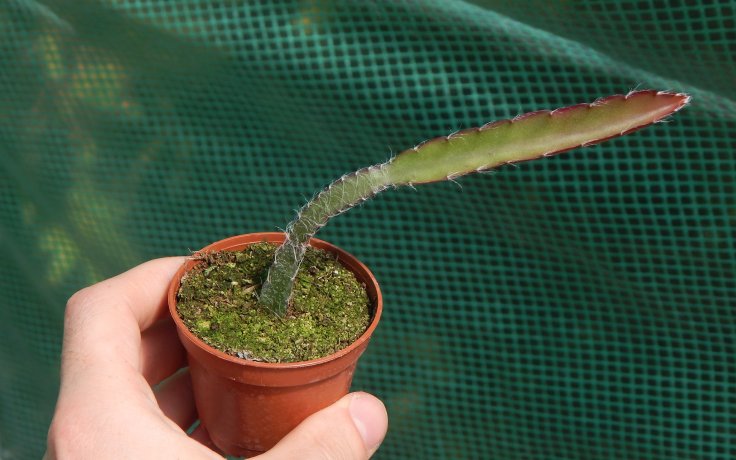
Lepismium cruciforme Red Tip
Partial shade is ideal for this plant, but it can also tolerate sunny locations.
Always water a few days after the substrate has dried out. Reduce watering in winter.
It can tolerate temperatures as low as -1.1 °C for short periods. However, the plant is not frost-resistant.
In its native habitat, it grows high in the treetops, where it often does not receive any direct sunlight.
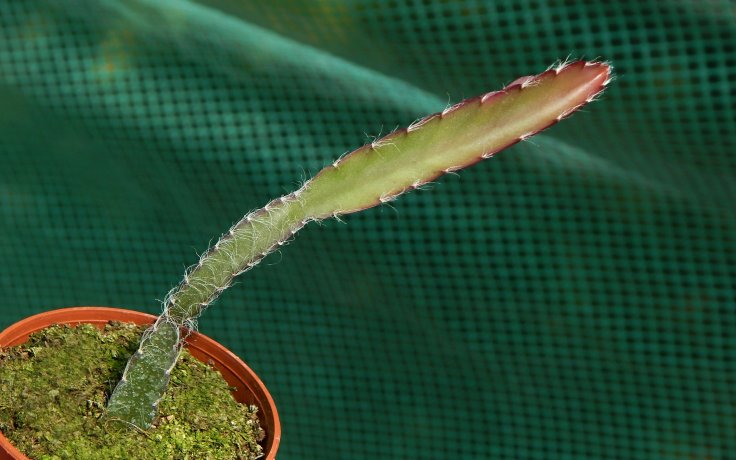
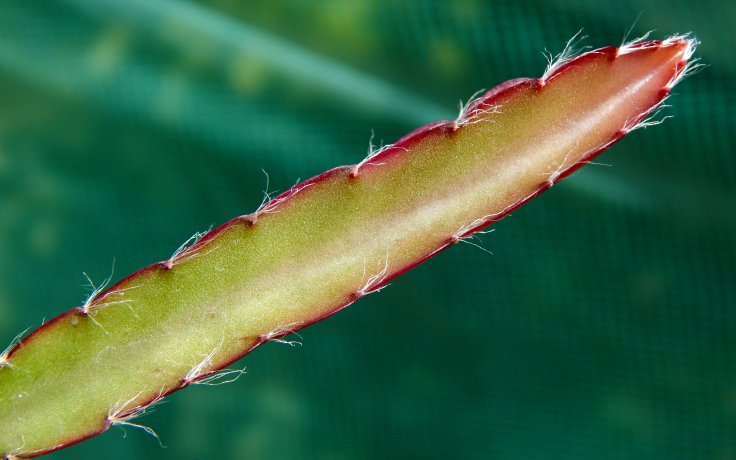
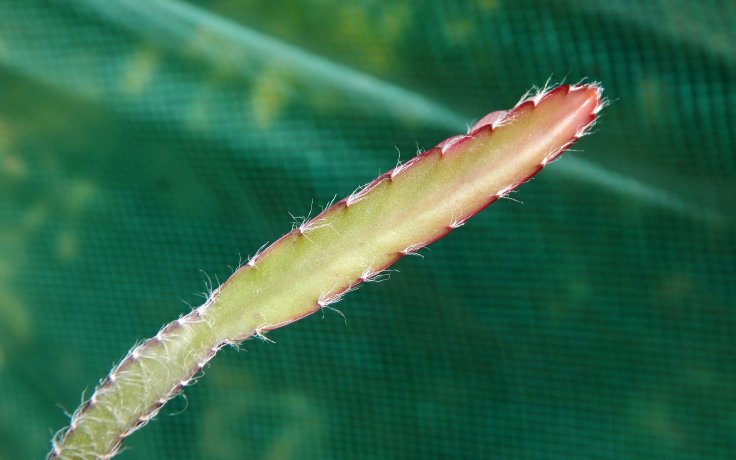
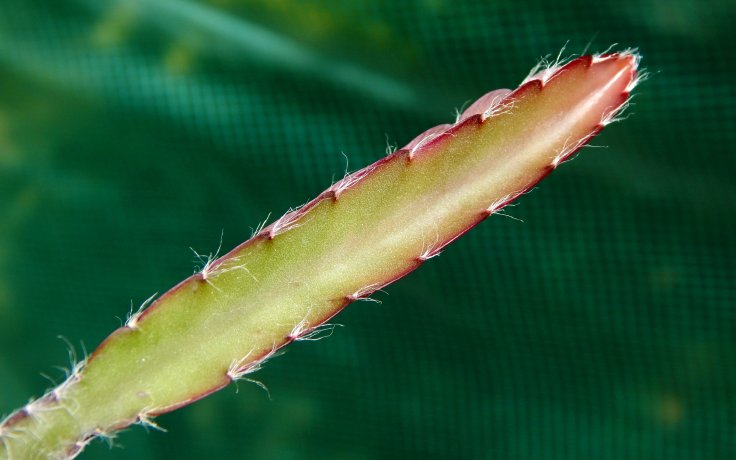
Lepismium cruciforme Red Tip is an epiphytic cactus that grows in nature on coastal rocks as well as epiphytically in seasonal forests, where it uses trees or rocks only as support. The cultivar Red Tip is grown mainly for the pronounced colouring of the stem tips, which becomes more intense with sufficient light.
The stems are thick, fleshy, and highly variable in shape, usually flattened with a distinctly scalloped margin. Their colour is green, often with a purplish tint, and in full sun the stems can take on almost chestnut tones, especially at the tips. The margins are lined with small tufts of short white hairs and lack spines. Individual segments can reach lengths of up to about 50 cm and widths of approximately 2 cm. The growth is trailing and gradually becomes denser.
Flowers appear in late winter and early spring. They are small, up to about 1.3 cm long, and range in colour from cream through yellow and pink to, rarely, purple. After flowering, spherical fruits develop that are purple to red and can reach up to 1.2 cm in diameter.
Lepismium cruciforme Red Tip requires a well-draining substrate with both organic and mineral components, a bright position without harsh midday sun, and regular but moderate watering. The substrate should not remain waterlogged for long periods. Thanks to its trailing growth, it is ideal for hanging containers, where the shape and coloration of the stems are shown to best effect.