- Home
- Succulents
- Kalanchoe
- Kalanchoe pinnata
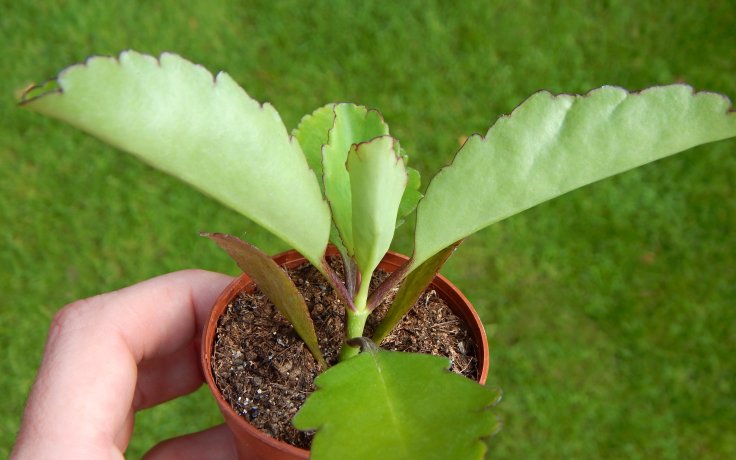
Kalanchoe pinnata
Ideally, place in a sunny location, but partial shade is also acceptable.
Always water a few days after the substrate has dried out. Reduce watering in winter.
It can withstand temperatures down to -1.1 °C for short periods. However, the plant is not frost-resistant.
Its flowers are called Cathedral Bells because their shape resembles hanging church bells.
Kalanchoe pinnata originally comes from Madagascar, but today it is widespread and naturalised in many tropical and subtropical regions of Africa, Asia, and the Americas. It is known by the common name Cathedral Bells, as well as Air Plant, Curtain Plant, or Floppers. The epithet pinnata means “winged” and refers to the shape of the upper leaves.
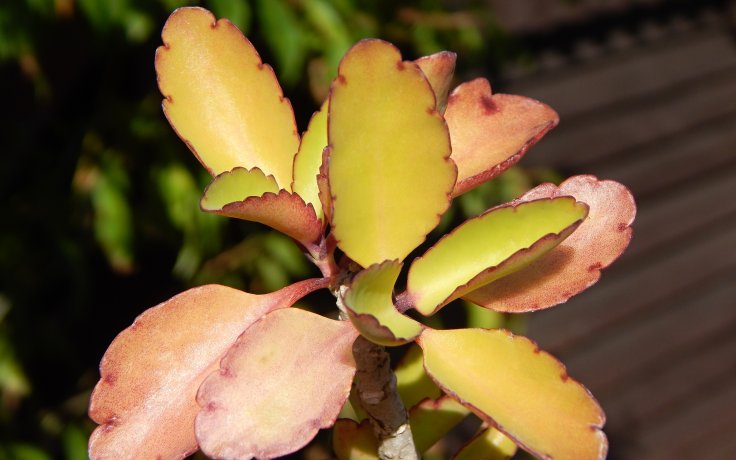
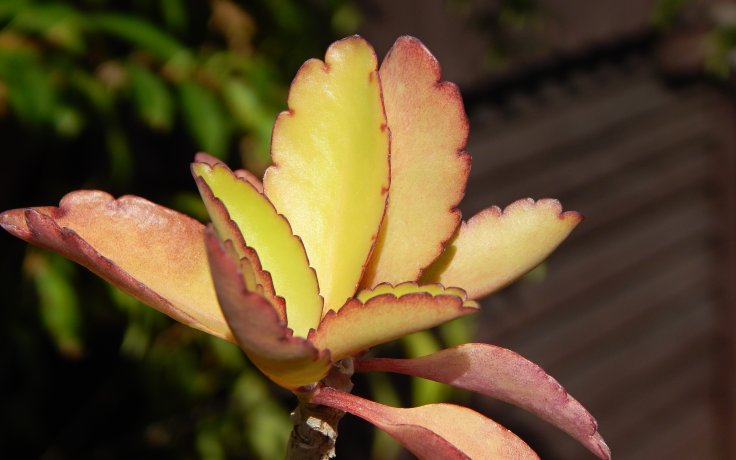
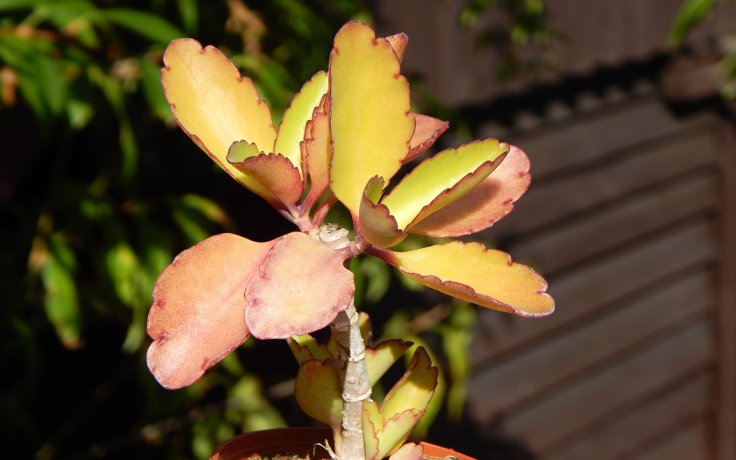
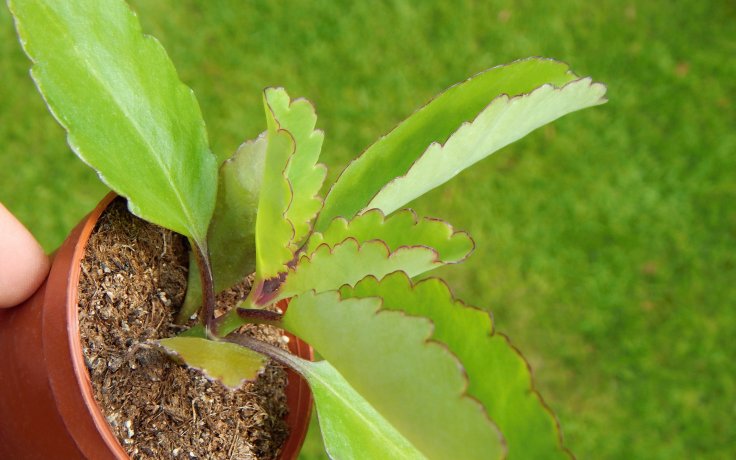
The leaves may be green, yellowish, or even purplish, often edged with an orange-red margin. In young plants they are simple, but with age they become pinnate, composed of 3 to 5 leaflets. The margins are scalloped, and the leaves can reach up to about 20 cm in length and around 12 cm in width. Small plantlets may sometimes form along the edges. The plant has sturdy upright stems that are hollow and can grow up to around 2 metres tall.
The flowers are bell-shaped and appear in large panicles. They have a pale yellow calyx with red to purple streaks and are one of the most striking features of this species, especially on older plants.
Kalanchoe pinnata grows best in a bright position with well-draining soil, and fertilising is not recommended. Given enough space, it can become quite large. To encourage flowering, the plant can be regularly moved into darkness for part of the day, as it blooms under shorter-day conditions. This species is interesting not only as an ornamental plant, but also because it has a long tradition of use in folk medicine.