- Home
- Succulents
- Kalanchoe
- Kalanchoe nyikae
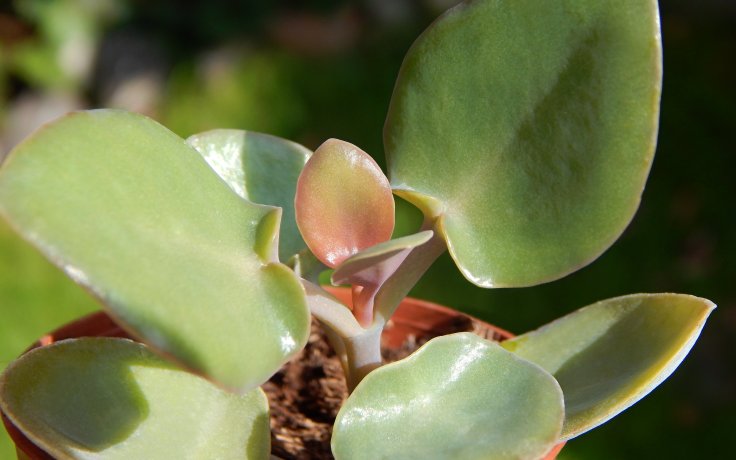
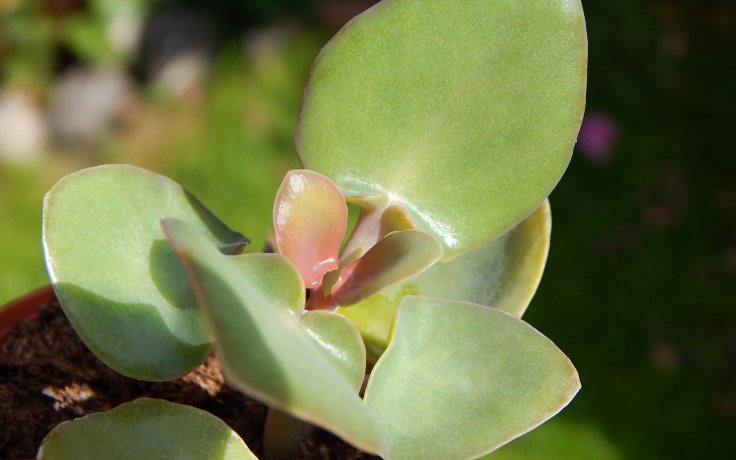
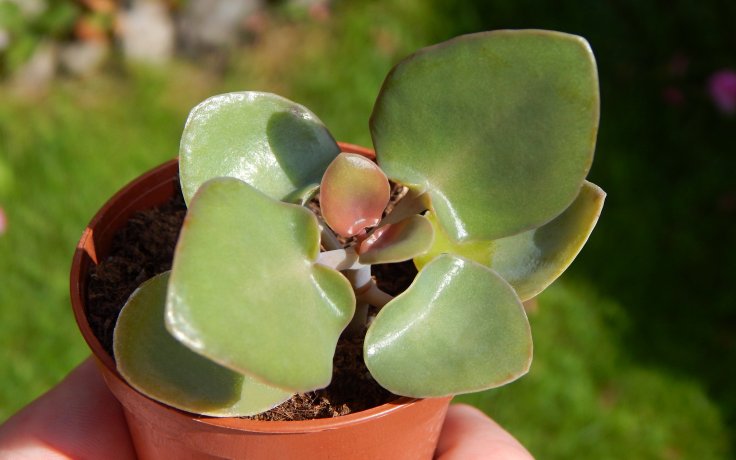
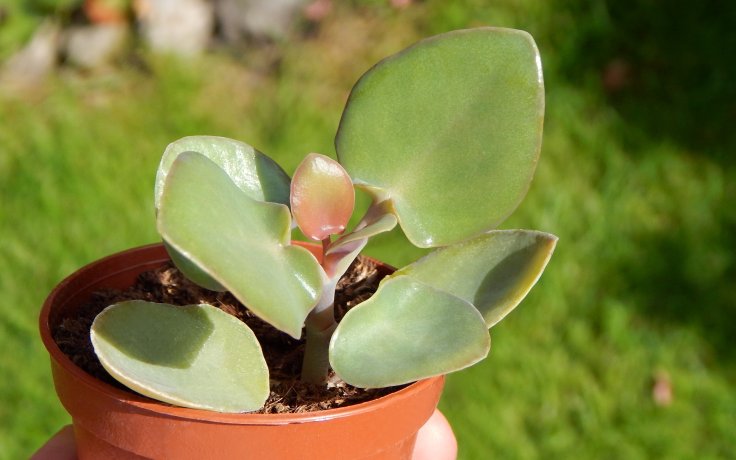
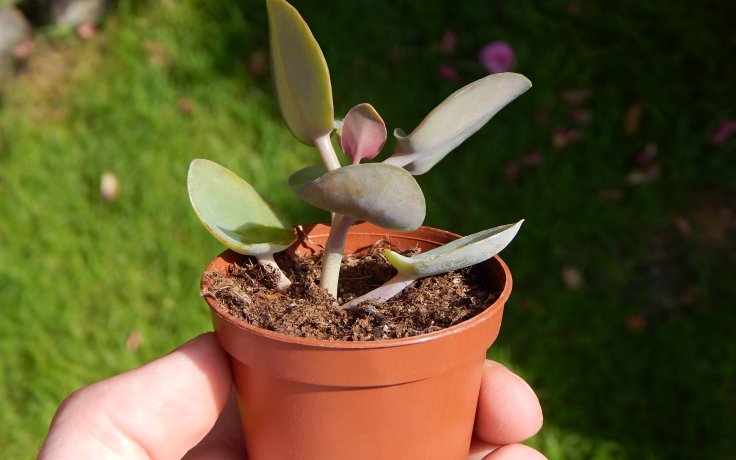
Kalanchoe nyikae
The plant likes sunny locations, but can also tolerate partial shade.
Always water a few days after the substrate has dried out. Reduce watering in winter.
It can withstand temperatures down to -3.9 °C for short periods. However, the plant is not frost-resistant.
The more light there is, the more pronounced the felt-like surface of the leaves becomes.
Kalanchoe nyikae originates from southeastern Kenya and northeastern Tanzania, where it grows in coastal and deciduous bushland at elevations up to about 1,000 metres. The species was first described by the German botanist Heinrich Gustav Adolf Engler in 1895. The epithet nyikae comes from the Swahili word nyika, meaning “inland,” referring to the plant’s natural habitat. It is also known under the synonym Kalanchoe hemsleyana.
The leaves are brownish-green to greyish, often covered with a fine waxy coating. They are fleshy, smooth, and have a paler underside. Leaves can reach up to about 8 cm in length and around 7 cm in width, attached to the stem by long petioles up to about 10 cm. Basal leaves are usually ovate, while upper leaves become more lance-shaped. The stems grow upright, sometimes slightly leaning at the base, and the plant can reach up to about 2 metres in height.
In spring, the plant produces flowers in creamy, pink, or salmon-pink shades. Flowering is most common on older, well-developed plants.
Kalanchoe nyikae is an easy and fast-growing species best suited to a bright position with well-draining soil. Water sparingly, only several days after the soil has completely dried out, and fertilising is usually not necessary. If you are looking for a taller Kalanchoe with waxy grey foliage and vigorous growth, Kalanchoe nyikae is an interesting choice.