- Home
- Succulents
- Huernia
- Huernia pendula
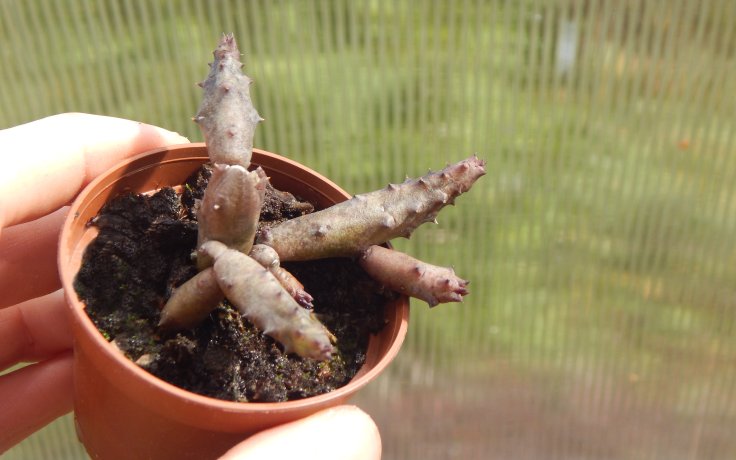
Huernia pendula
Place in a sunny location.
Water a few days after the substrate has dried out. Reduce watering significantly in winter.
The temperature should not fall below 0 °C. The plant is not frost-resistant.
It naturally attaches itself to pockets of soil and leaves on rocky ledges, often facing north or east.
Huernia pendula is a South African endemic species restricted to river gorges of the Transkei region in the Eastern Cape. It is known by the common name Bootlace huernia, referring to its long trailing stems. The epithet pendula means “hanging” or “pendant,” describing both the growth of the shoots and the flowers. In nature it grows in pockets of soil and leaf litter gathered on cliff ledges and rocky outcrops, often on north- or east-facing walls. These inaccessible habitats protect it from trampling and grazing, which are major threats to succulents in the area.
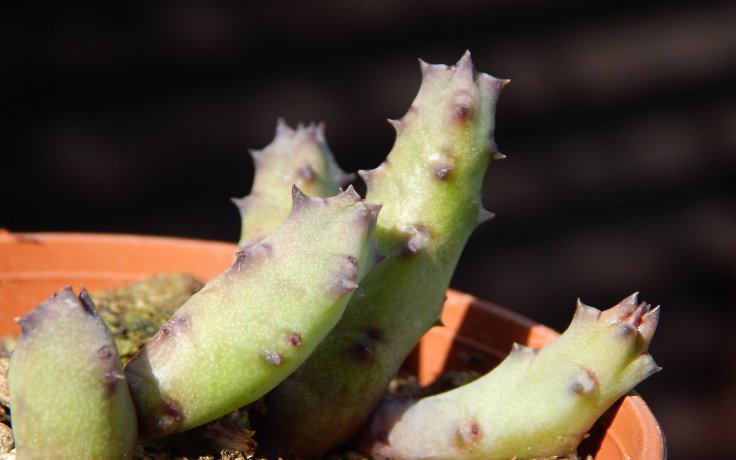
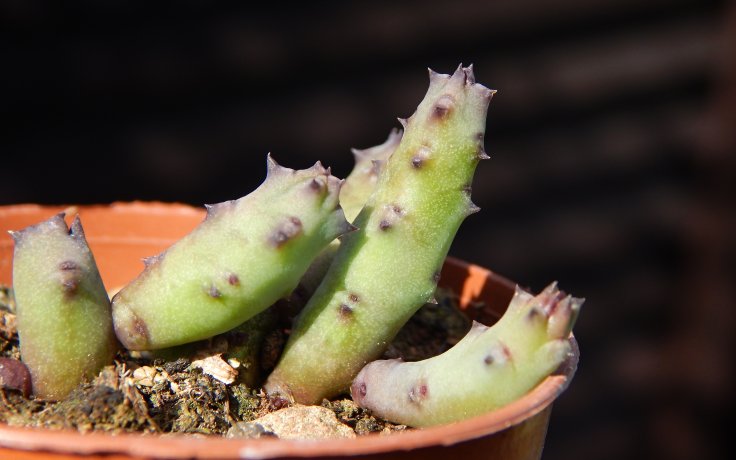
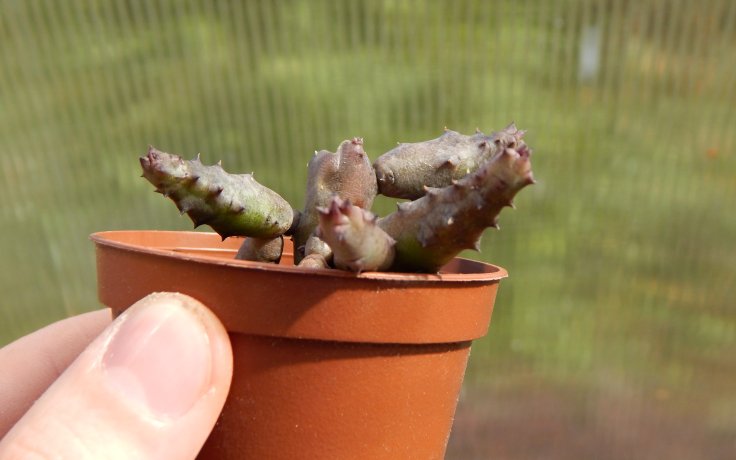
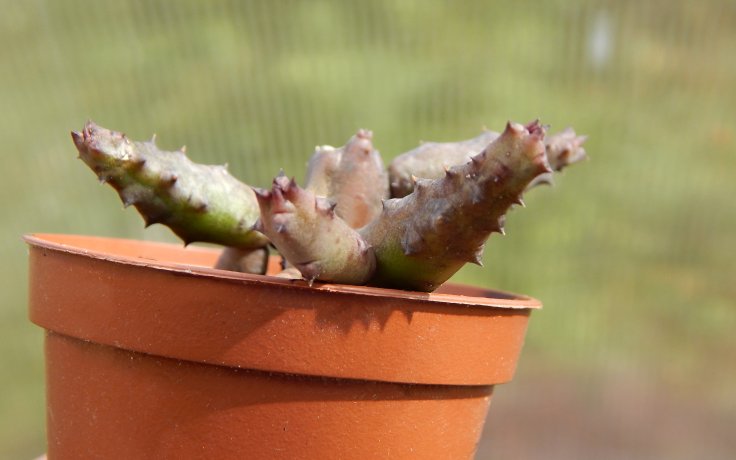
The stems are fleshy, leafless, green to grey-green, sometimes mottled with purple. During dry periods they may develop reddish tones. The shoots are more or less cylindrical or bluntly four-angled, irregularly branched, and typically start upright before bending and trailing with age. When they touch the ground, they root easily, allowing the plant to form loose clumps.
The flowers are small, bell-shaped, purple with triangular lobes, and appear from spring into summer. They hang downwards and may produce an odour of decaying flesh, as they are mainly pollinated by flies.
Huernia pendula is considered one of the easiest Huernia species to grow. It performs best in light shade, but tolerates more sun as well as slightly shadier positions. It is very heat tolerant and can handle cooler temperatures, although frost must be avoided. If you are looking for a Huernia with a trailing habit and small purple blooms, Huernia pendula is an excellent and unusual choice.