- Home
- Succulents
- Hoya
- Hoya salweenica
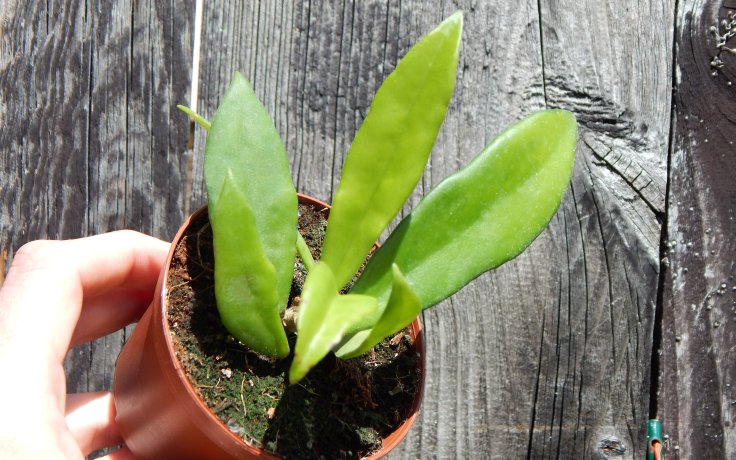
Hoya salweenica
Wax plants thrive best in semi-shaded locations.
Always water a few days after the substrate has dried out. Reduce watering in winter.
Room temperature is ideal. The plant is not frost-resistant.
The species name refers to the Salween River in Southeast Asia, where it originates.
Hoya salweenica is a wax plant species native to China, botanically described in 1974. It belongs among epiphytic Hoyas that naturally grow as climbing shrubs in forest habitats, where they attach to trees and produce long trailing shoots.
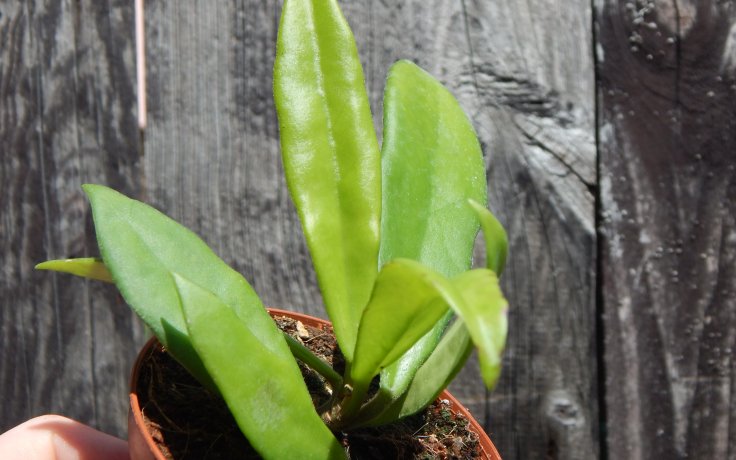
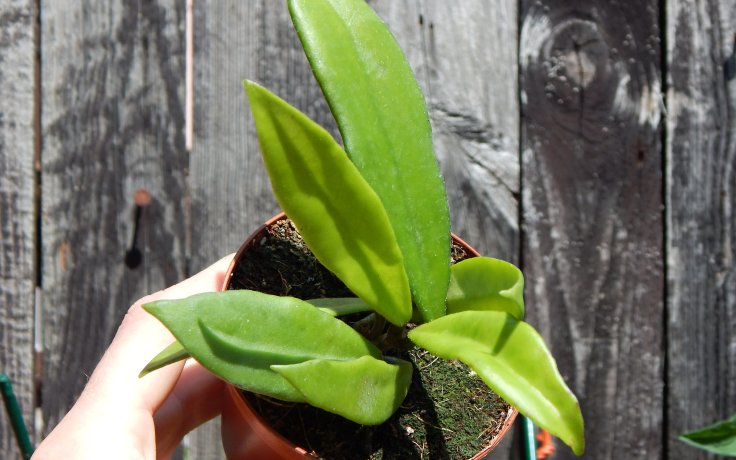
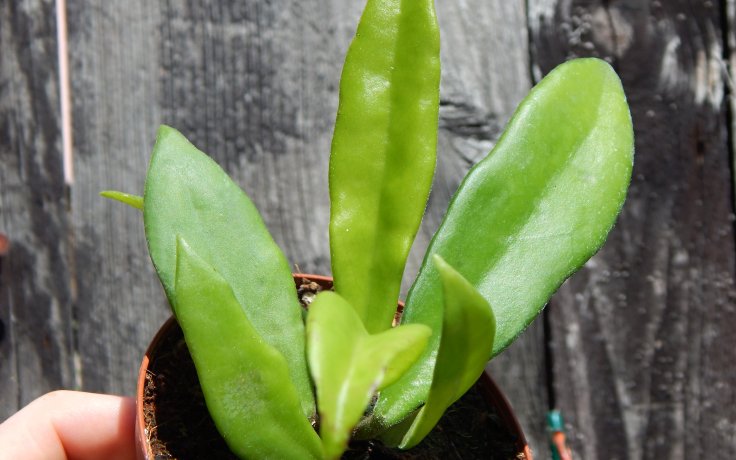
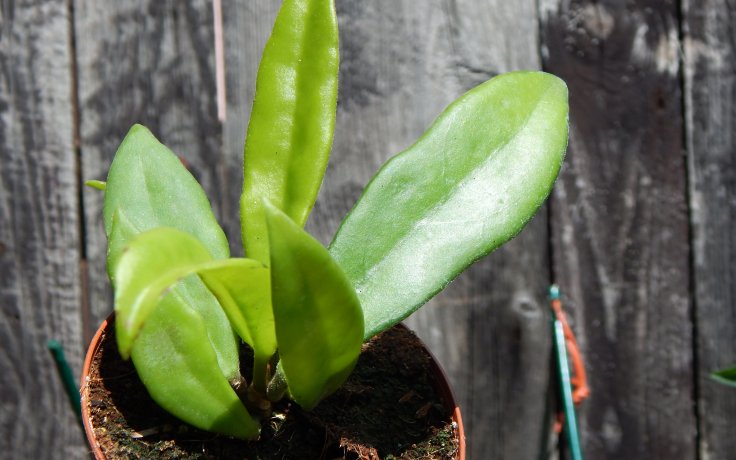
The leaves are light green, narrow, and elongated, with a clearly visible central vein. They are thick and fleshy, usually reaching about 16 cm in length and around 4 cm in width. The plant develops vine-like stems, which under good conditions can grow up to about 2 metres long.
The flowers closely resemble those of Hoya carnosa. They have a white outer corolla and a pale yellow centre with a soft pink tone. Individual flowers are flat, about 1.5 cm in size, and an umbel may contain up to around 20 flowers. The blooms last for approximately 10 days and have a sweet fragrance.
Hoya salweenica is a fast-growing species best suited for a bright position without harsh direct sunlight. It thrives in a well-drained substrate for epiphytic plants with careful watering. Thanks to its narrow leaves and abundant flowering, it is an excellent choice for anyone looking to add a less common yet very attractively blooming Hoya to their collection.