- Home
- Succulents
- Haworthia
- Haworthia arachnoidea var. setata
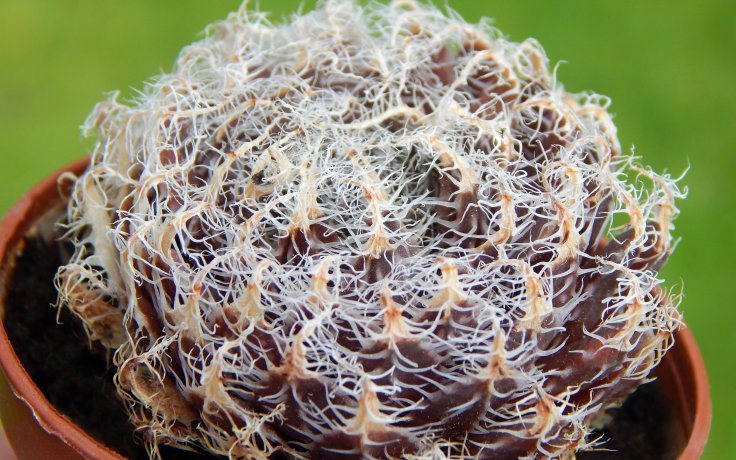
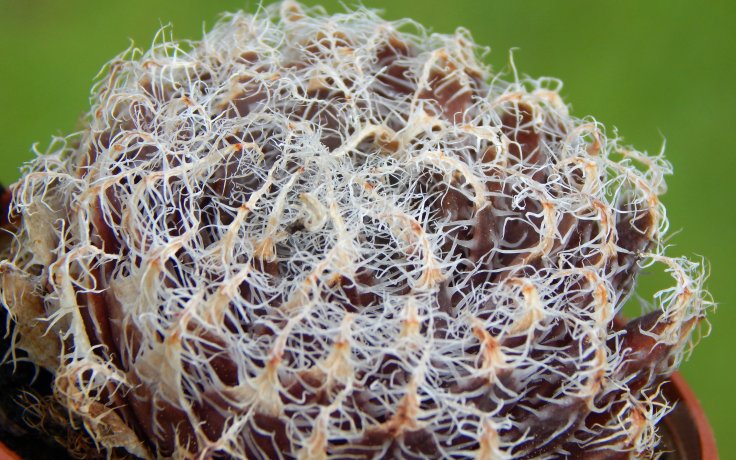
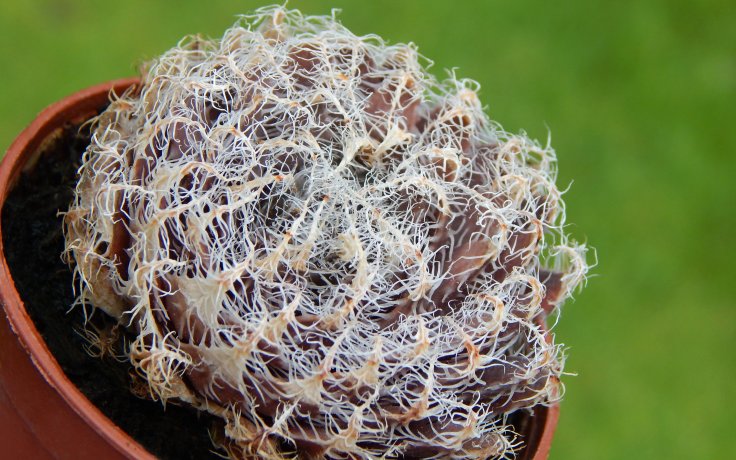
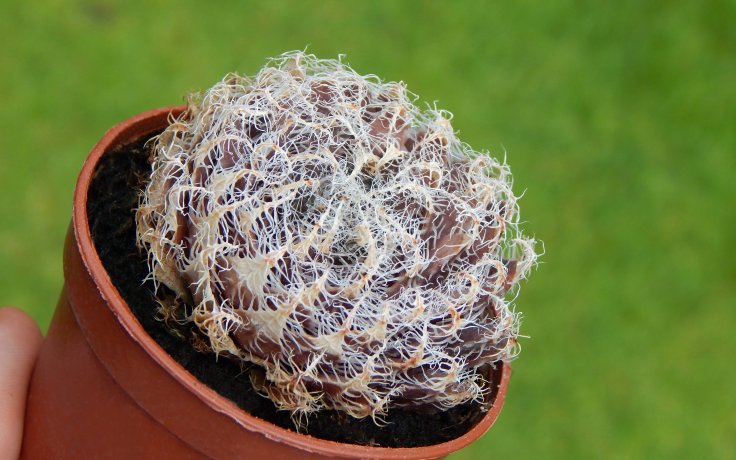
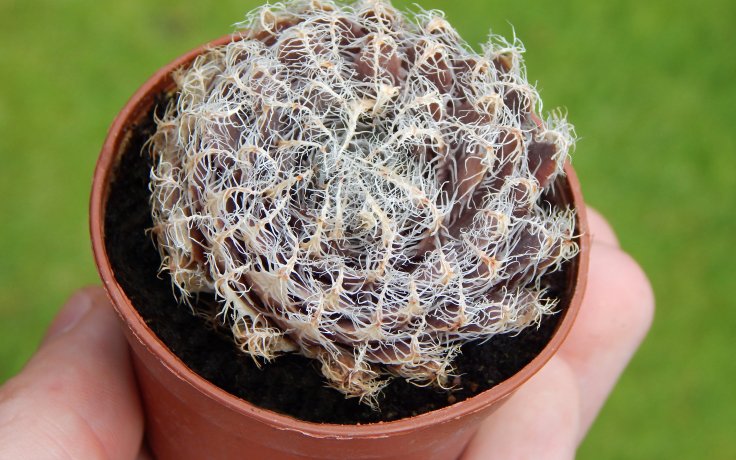
Haworthia arachnoidea var. setata
Ideally, place in partial shade.
Always water a few days after the substrate has dried out. Reduce watering in winter.
It can tolerate temperatures as low as -1.1 °C for short periods. However, the plant is not frost-resistant.
During dry periods, the rosettes shrink noticeably, while they open up significantly in higher humidity.
Haworthia arachnoidea var. setata is one of the forms of the species Haworthia arachnoidea. It originates from South Africa, specifically from the Western Cape, mainly in the Little Karoo region. It is a widespread and morphologically variable taxon, and its appearance may differ depending on the exact locality of origin.
This succulent usually forms solitary rosettes about 7.5 cm in diameter with a short stem. A rosette can carry up to around 40 leaves, which are densely arranged, elongated-lanceolate and protruding, measuring approximately 3 cm in length and about 1.3 cm in width. The leaf margins are distinctly ciliate, with soft, hair-like teeth about 2 mm long, and the leaf tips often dry out. In dry conditions, the rosettes close completely, while under higher humidity they open again.
The inflorescence is borne on a simple flower stalk about 15 cm long. The plant flowers relatively frequently, which is typical for this species.
Haworthia arachnoidea var. setata is an easy succulent suitable for a bright position without direct, harsh sunlight, which can cause undesirable color changes. During summer, the plant often renews its root system, gradually replacing old roots with new ones. It grows best in well-draining soil and in smaller pots. If you are looking for a finely hairy Haworthia with a variable appearance and an interesting response to humidity, this form is well worth attention.