- Home
- Succulents
- Greenovia
- Greenovia aurea variegata
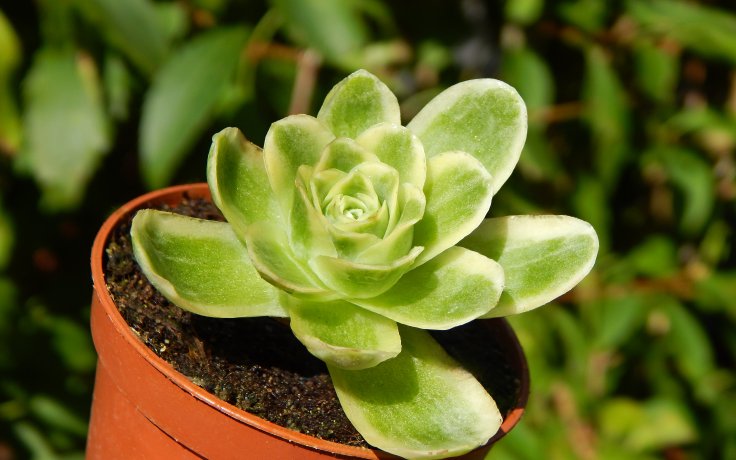
Greenovia aurea variegata
Sun or partial shade is suitable for this plant.
Always water a few days after the substrate has dried out. Reduce watering in winter.
It can tolerate temperatures as low as -1.1 °C for short periods. However, the plant is not frost-resistant.
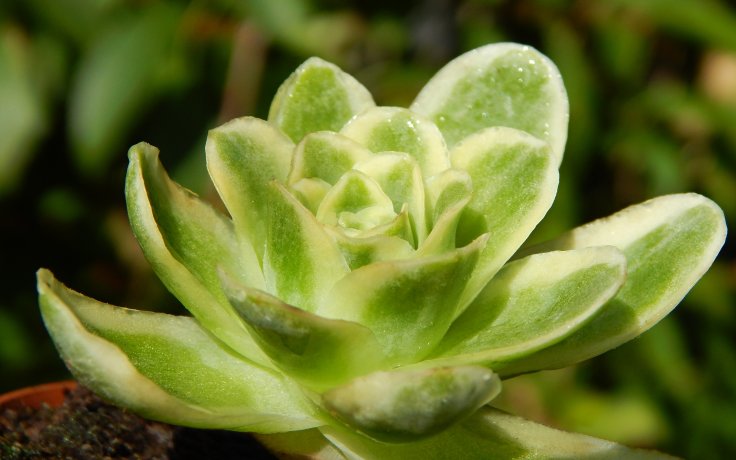
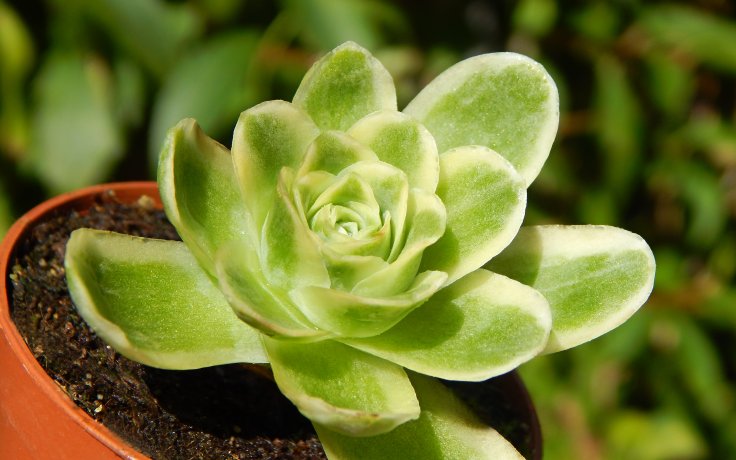
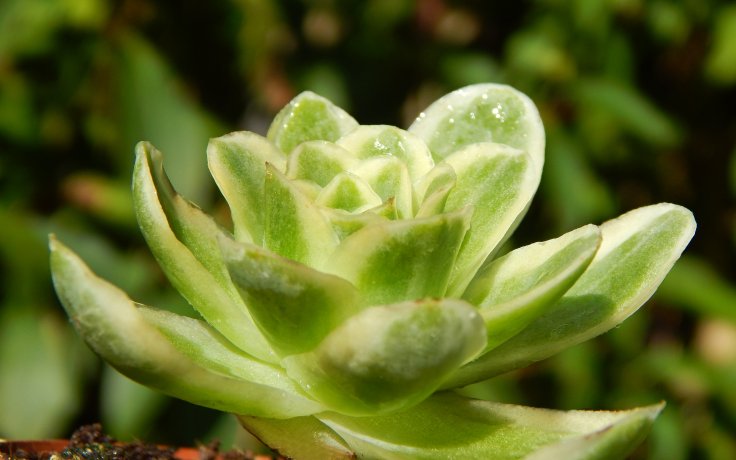
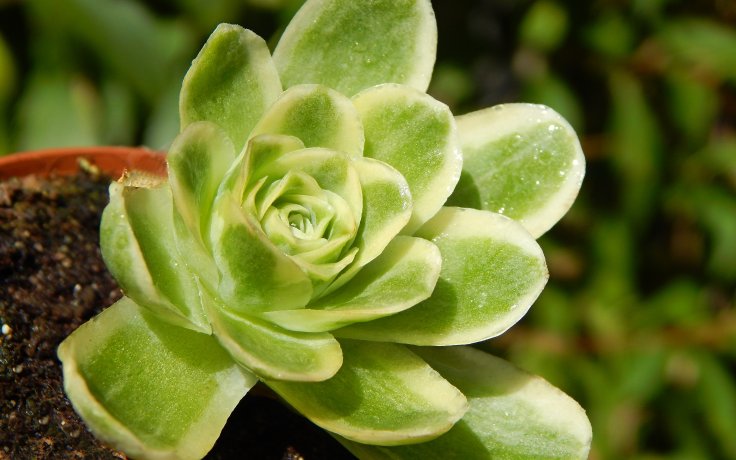
It attracts attention with its rosettes, which "close" tightly like buds during dry periods. The variegated leaves also create a unique pattern on each plant.
Greenovia aurea variegata is a variegated form of the green species Greenovia aurea, also known as Sempervivum aureum, Aeonium aureum, or Green Rose Buds. The original species originates from the Canary Islands, specifically El Hierro, La Gomera, La Palma, Gran Canaria, and Tenerife, where it grows at elevations of approximately 400–2000 m. The variegated form occurs only in cultivation and retains the typical growth habit and behaviour of the species.
The leaves are fleshy, obovate to spatulate, with rounded to truncate tips. The basic green coloration is combined with lighter, creamy to yellowish variegated areas. The leaves are arranged in a very tight rosette that resembles a closed rose bud. Depending on conditions, the rosette gradually opens and closes and can reach a considerable diameter.
It flowers relatively rarely and only once in its lifetime. Flowering usually occurs during the summer months, the flowers are yellow and inconspicuous. After flowering, the flowering rosette dies, while continuation is ensured by seeds or side offsets.
Greenovia aurea variegata requires well-draining soil, a bright location, and watering adjusted to current conditions, always waiting until the soil has dried out. Growth is relatively rapid, and the plant responds well to consistent care without overwatering. It looks best when grown alone in a pot, where the shape of the rosette and the changes in its opening throughout the season are clearly visible.