- Home
- Succulents
- Faucaria
- Faucaria hooleae
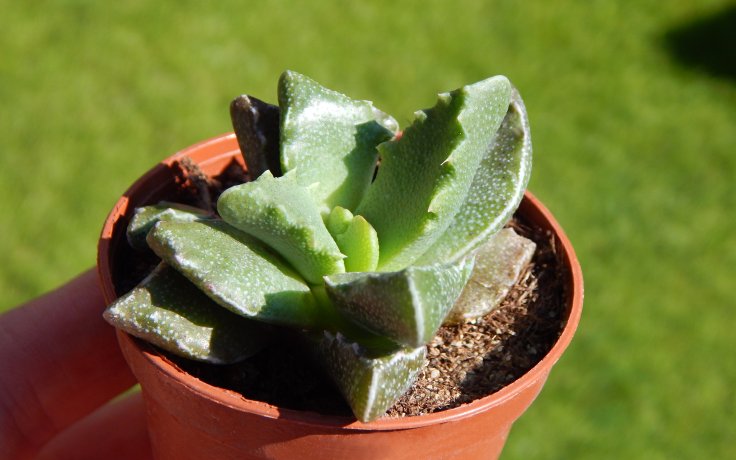
Faucaria hooleae
The plant likes a sunny habitat, but can tolerate partial shade.
Always water a few days after the substrate has dried out. In the winter, stop watering after a few days.
It can tolerate -3,9 °C in the short term. However, the plant is not hardy.
This species occurs only in a narrow band, about 3 km around the South African village of Riebeek East in the Eastern Cape province.
Faucaria hooleae is a small species also known as Dwarf tiger jaw. The currently accepted scientific name is Faucaria gratiae. The specific epithet gratiae means “grace” and likely refers to the delicate and attractive appearance of the plant. In nature, it occurs in a very restricted area around the village of Riebeek East in the Eastern Cape of South Africa, within a radius of only about 3 km. It grows in sandy soil in cracks and hollows of flat sandstone slabs and is known from only a few local sites, including two farms.
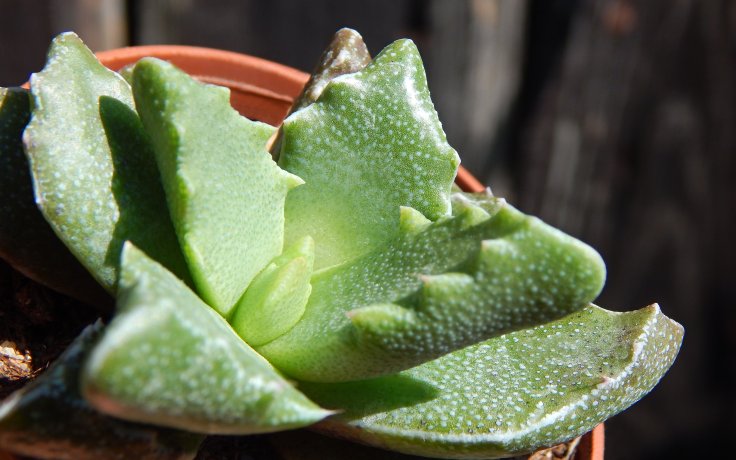
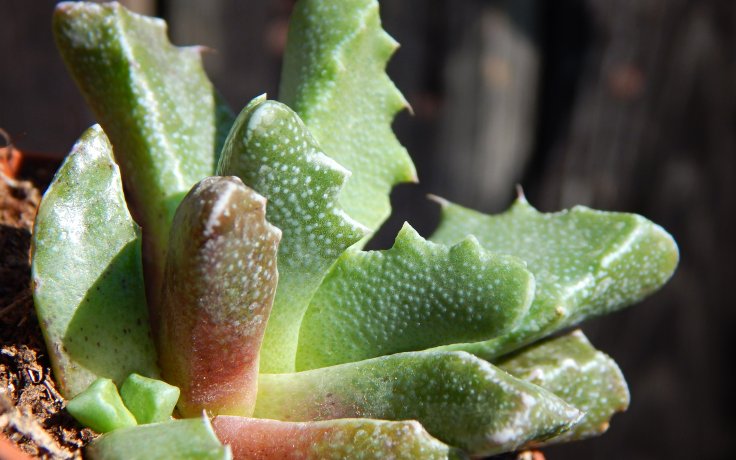
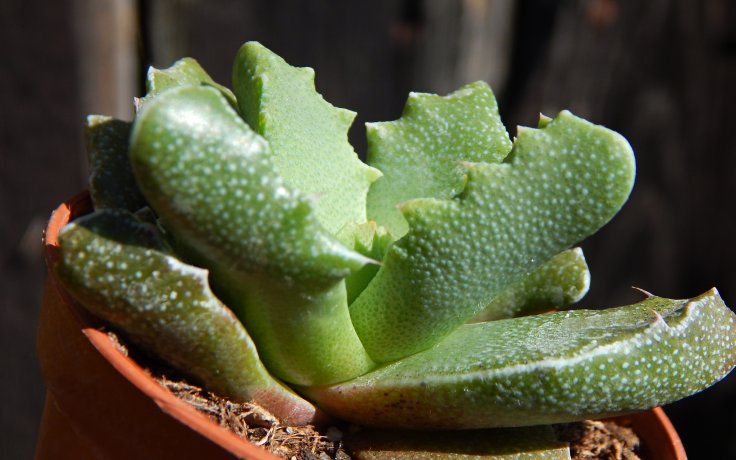
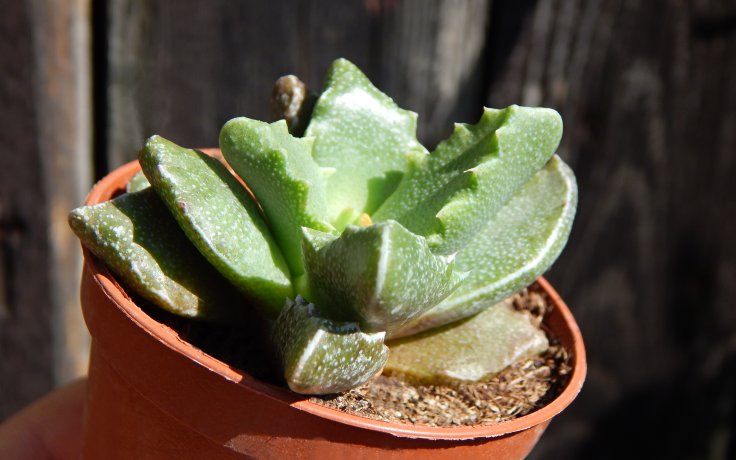
This succulent is among the smallest members of the genus Faucaria. It forms small, clumping rosettes with a very short stem. The leaves are thick and fleshy, glossy green to reddish or purplish, with numerous coarse white dots on the surface. They have a whitish keel and margins and reach up to about 3.5 cm in length and 2 cm in width. The leaf margins are irregularly toothed, with each leaf bearing usually 2 to 5 teeth that widen into small roof-like structures. The plant reaches a maximum height of about 8 cm.
The flowers are yellow and composed of 60 to 85 narrow petals. They appear in late autumn and early winter and are relatively large in proportion to the size of the plant.
Faucaria hooleae is a slow-growing succulent that prefers rather limited watering. Despite its small size, it stands out with its neat growth and showy flowers and can be an interesting addition to a focused succulent collection.