- Home
- Succulents
- Dudleya
- Dudleya brittonii
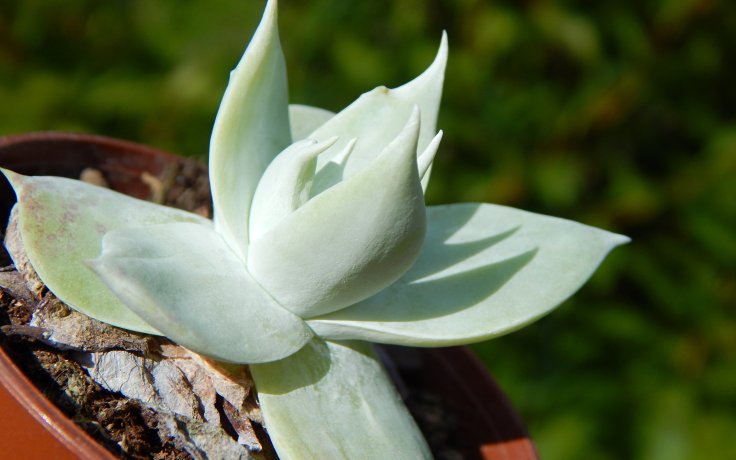
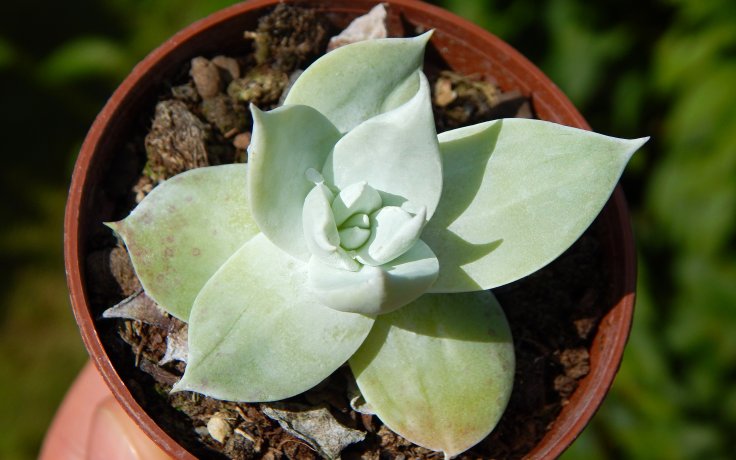
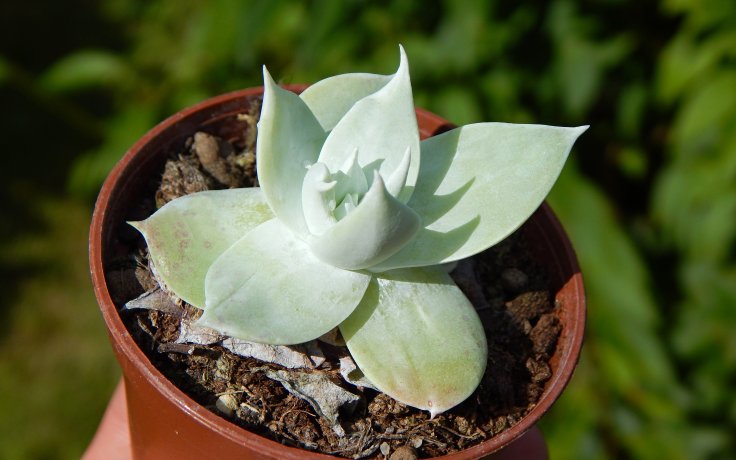
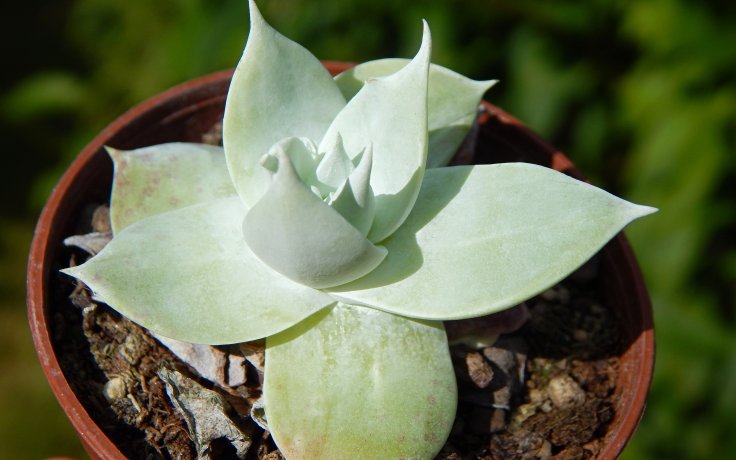
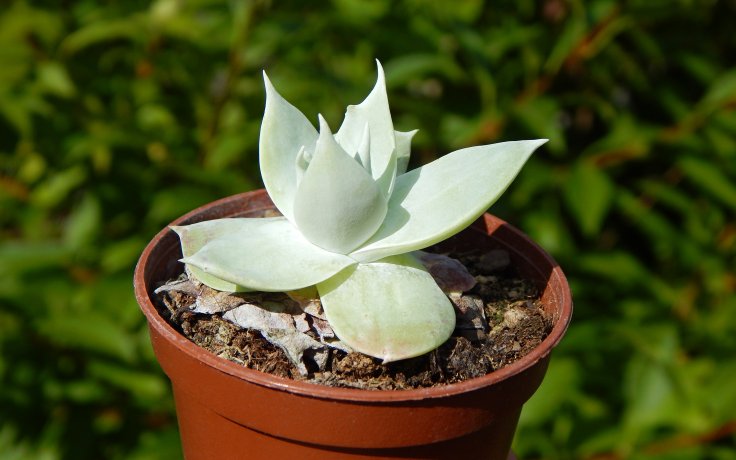
Dudleya brittonii
The plant likes sunny locations, but can also tolerate partial shade.
Always water a few days after the substrate has dried out. Reduce watering in winter.
It can withstand temperatures as low as -6.7 °C for short periods. However, the plant is not frost-resistant.
It creates a beautiful, bright white wax rose that looks almost unreal.
Dudleya brittonii is a species known as Giant Chalk Dudleya. The specific epithet brittonii honors Nathaniel Lord Britton (1859–1934), an American botanist, taxonomist, and co-founder and first director of the New York Botanical Garden. The species occurs on the Baja California Peninsula and on the coasts of nearby islands, in regions with winter rainfall. Dudleya brittonii is quite variable, and different forms exist that vary in leaf shape and coloration.
This succulent has a short, thick basal stem topped with a rosette of green leaves covered with a distinctive white, powdery coating, often with reddish tips. Old, dried leaves persist on the stem and gradually elevate the rosette, forming a trunk that can reach several tens of centimeters in height. When the stem is cleared of old leaves, a solid, thick trunk becomes visible. Plants usually grow singly, or more rarely in small groups of two to ten rosettes. Individual leaves can reach up to about 50 cm in length and around 8.5 cm in width.
The flowers are translucent to whitish, sometimes with a yellowish tint along the keel. They are urn-shaped and appear in late winter and spring on sturdy, reddish-purple flowering stalks with branching, slender pedicels. The inflorescences can grow up to approximately 90 cm long.
Dudleya brittonii has a pronounced dormant period caused by drought, which ends with the onset of autumn or winter rains. The shriveled leaves quickly rehydrate and growth resumes. An interesting feature is that species naturally growing on ocean cliffs show tolerance to salt spray and saline conditions.