- Home
- Succulents
- Crassula
- Crassula sarcocaulis Big Leaves
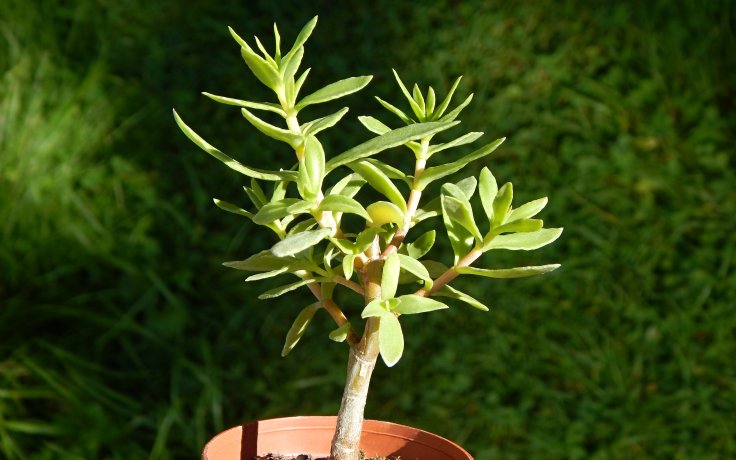
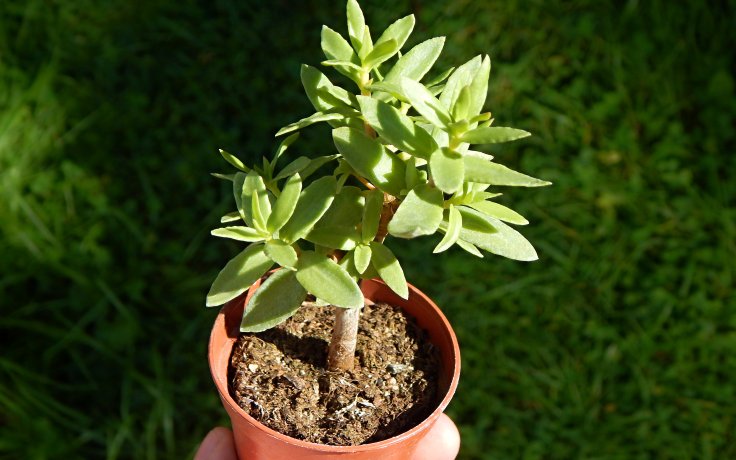
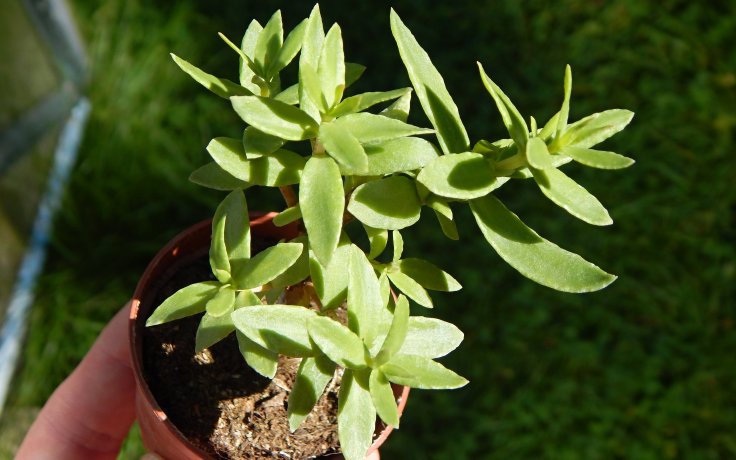
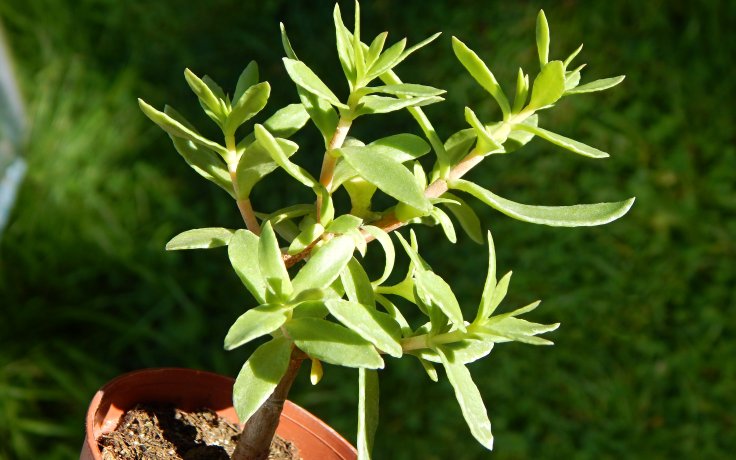
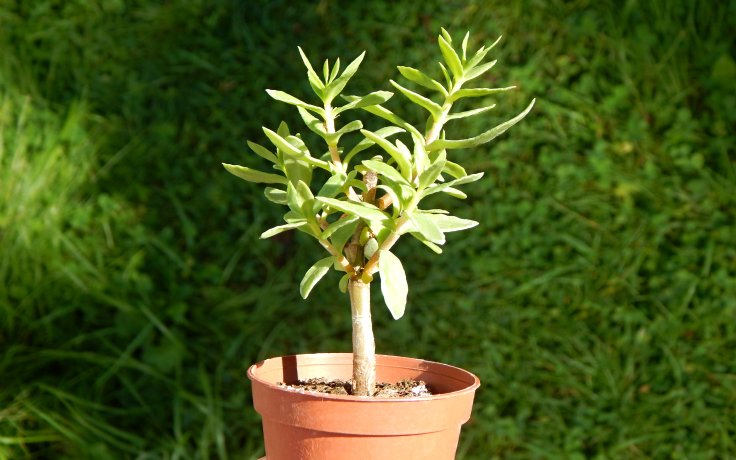
Crassula sarcocaulis Big Leaves
Ideally, place in a sunny location. If possible, place it outside during the summer.
Water a few days after the substrate has dried out. Reduce watering in winter.
It can reportedly withstand temperatures down to -12.2 °C. However, the plant is not frost-resistant.
Compared to the classic form, this cultivar has noticeably larger leaves, giving it a more robust appearance.
Crassula sarcocaulis Big Leaves is a large-leaved form of the species Crassula sarcocaulis, a succulent native to eastern parts of South Africa and neighboring regions. In nature, it grows on mountainous slopes in rocky terrain. The epithet “sarcocaulis” refers to the fleshy stems of the plant. It is often nicknamed Bonsai Crassula, reflecting its tree-like growth and suitability for shaping.
The leaves of this form are noticeably larger than those of the typical plant, green in color and concentrated at the tips of the shoots. The stems and thin branches become woody relatively early and are covered with peeling brown bark. The plant naturally branches well and forms thickened, sturdy roots. With long-term cultivation it can reach substantial size, although growth is slow.
At the beginning of summer, flower buds appear at the ends of the branches and later open into small, softly pink flowers. The flowers are arranged in compact inflorescences and have a pleasant sweet, fruity fragrance. After flowering, it is advisable to remove the dried flower clusters.
Crassula sarcocaulis Big Leaves requires a well-draining substrate and a bright position. Watering should be moderate and only after the substrate has dried out, as it must not remain waterlogged for long periods. Thanks to its woody trunk and larger leaves, this form is well suited for shaping and works well as a striking solitary plant in a container.