- Home
- Succulents
- Ceropegia
- Ceropegia simoneae
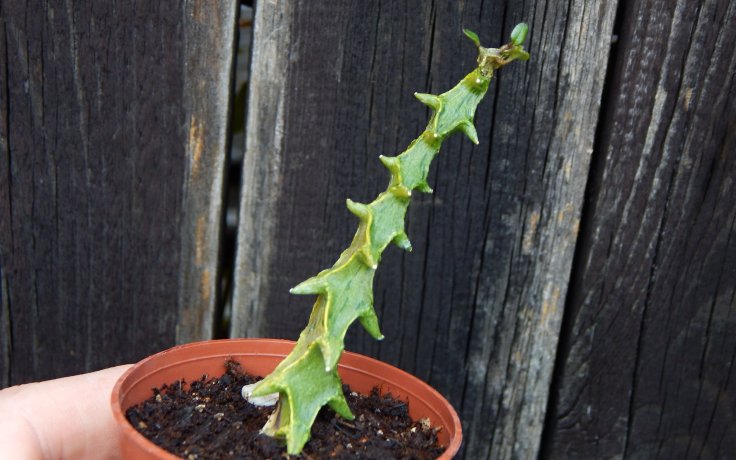
Ceropegia simoneae
Ideally, place in partial shade.
Always water a few days after the substrate has dried out. Reduce watering in winter.
Room temperature is ideal. The plant is not frost-resistant.
It belongs to species that have two completely different types of stems – one serves for growth, the other for flowering.
Ceropegia simoneae was described only in 1993 by Professor Werner Rauh. The species name honors Simone Petignat, the wife of Swiss amateur botanist Hermann Petignat, who together took part in many of Rauh’s botanical expeditions to Madagascar. The natural range of this species is known from the locality of Totiara near Tsihombe-Ihado in southern Madagascar, where it grows in very hot and dry areas with sandy–clay soil.
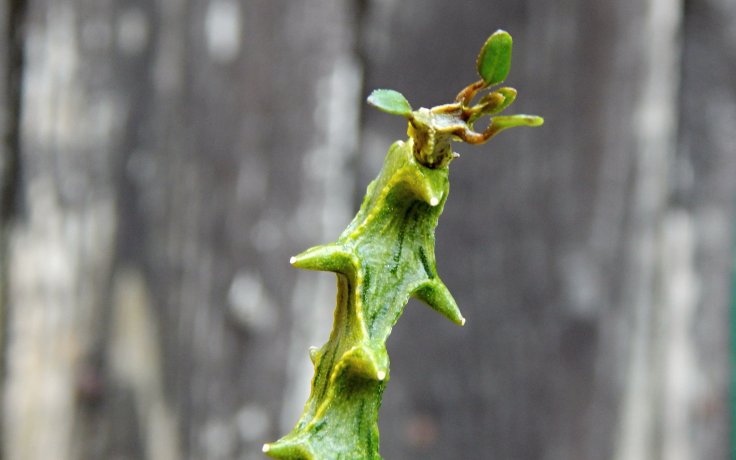
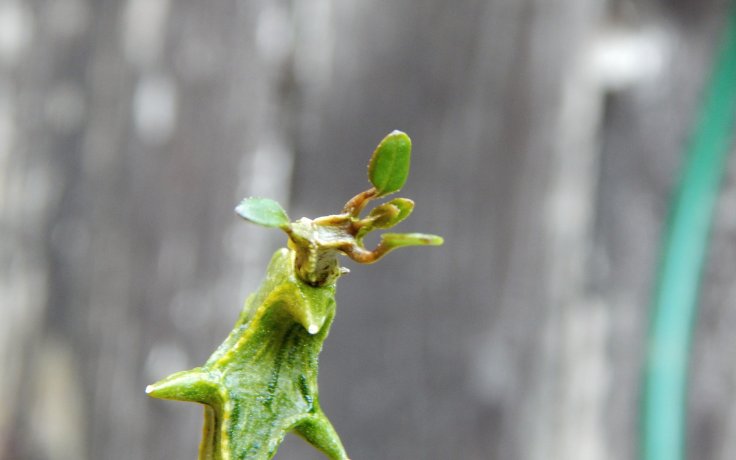
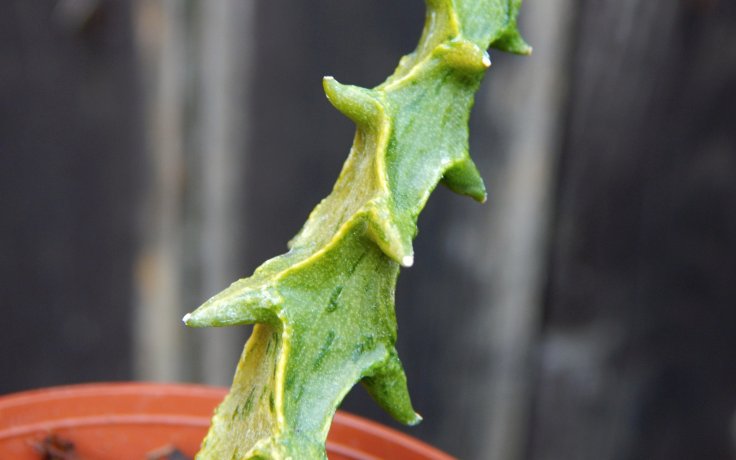
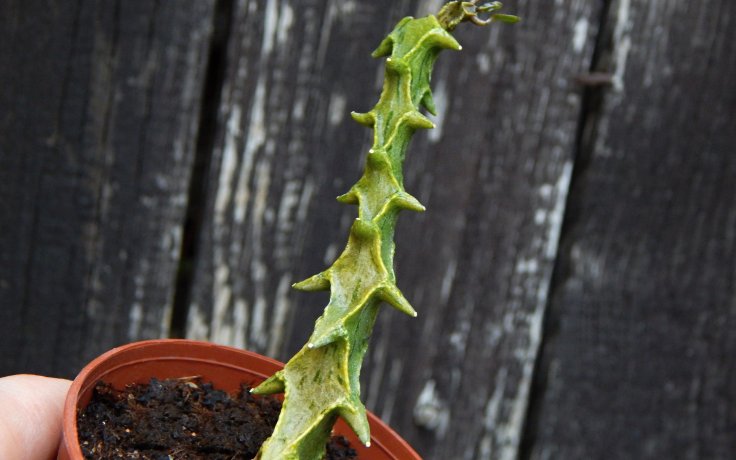
This succulent belongs to the so-called dimorphic Ceropegia species, characterized by clearly different vegetative and flowering stems. The plant has a trailing to creeping growth habit. The vegetative stems are soft to the touch, predominantly green, four-angled and distinctly warty, with alternating flattened sides. The leaves are shortly petiolate and dark green.
The flowers are highly distinctive, especially at an early stage, when the fine, feather-like corolla lobes are tightly rolled together. They develop on thin cylindrical stems arising from the vegetative shoots, while the main stem becomes noticeably wrinkled during flowering. Blooming takes place in autumn.
Ceropegia simoneae is considered a more demanding succulent, particularly during the winter period, and does not require fertilizing. If you are looking for a collector’s candlestick plant with an unusual stem structure and striking flowers, this species is best suited for more experienced growers.