- Home
- Succulents
- Ceraria
- Ceraria namaquensis
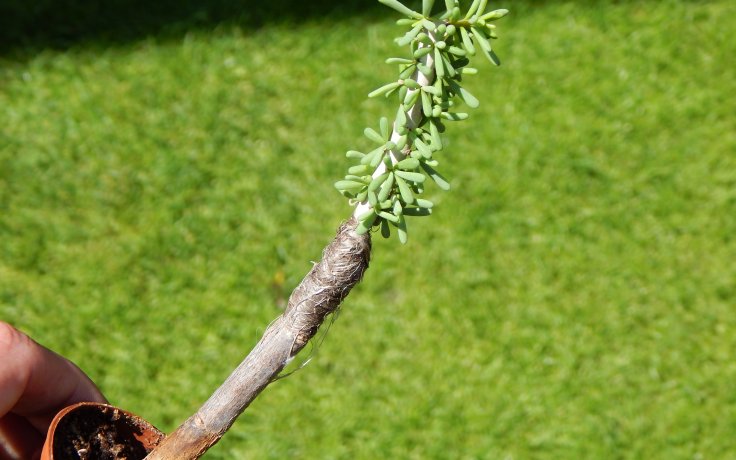
Ceraria namaquensis
The plant likes sunny habitat and partial shade.
Always water a few days after the substrate has dried out. In winter, limit watering.
It can tolerate temperatures down to -3.9 °C in the short term. However, the plant is not hardy.
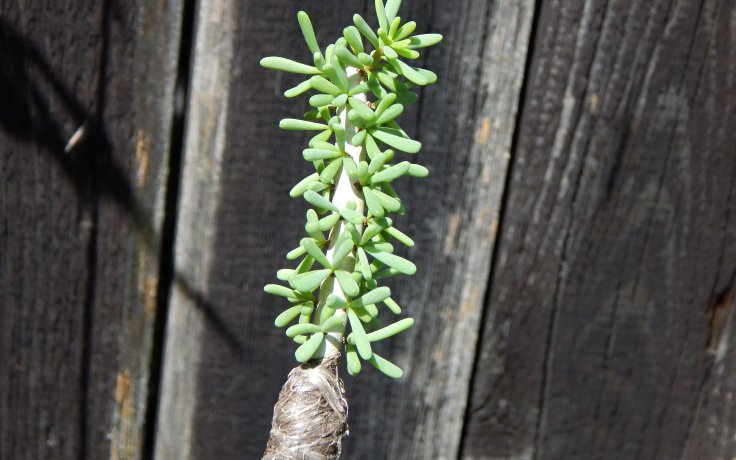
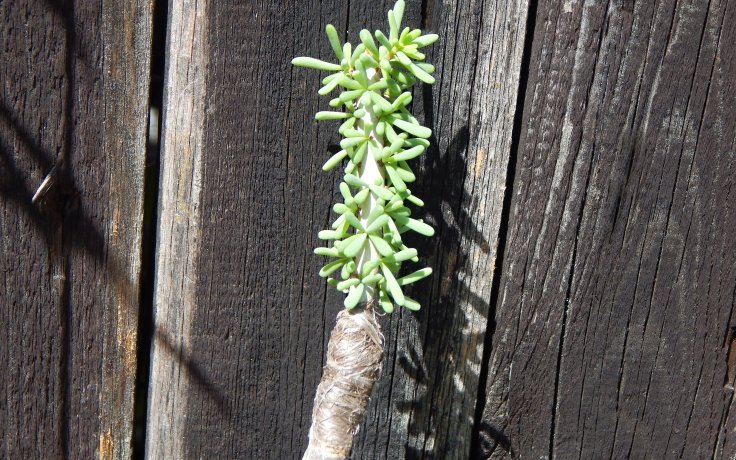
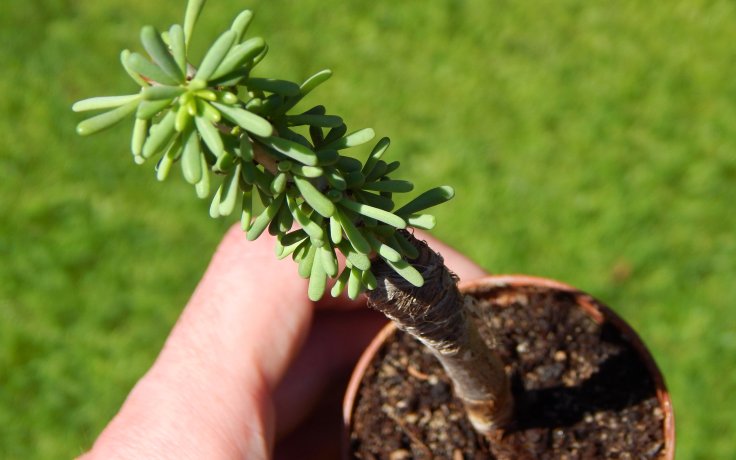
It is usually grafted onto the succulent Portulacaria afra.
Ceraria namaquensis is a species known under the names Namaqua porkbush, False Portulacaria, or also as Portulacaria namaquensis. The genus name Ceraria is derived from the Greek word cera (“small horn”) and likely refers to the forked, sometimes horn-like appearance of the branches. The species has a relatively wide distribution in South Africa and Namibia, occurring in extremely arid regions with winter rainfall, where it grows in open shrubland on rocky outcrops, especially on heavily weathered gneiss and scattered quartzite rocks.
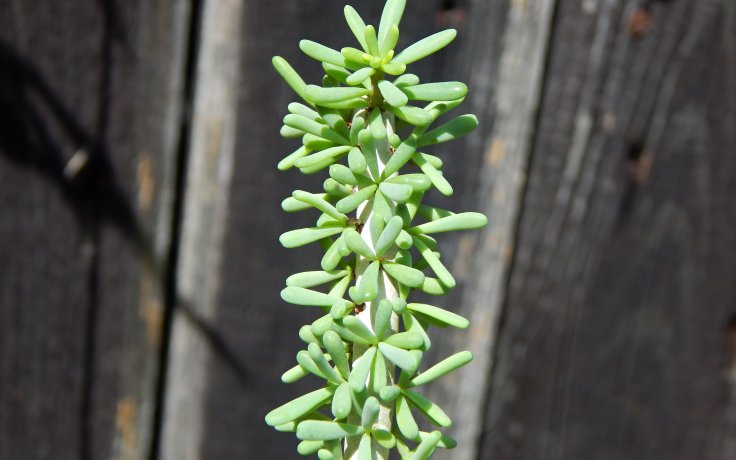
This succulent forms a woody desert shrub or small tree with upright, robust, and branched stems. The bark is smooth, silvery grey to brown. The leaves are small and green, about 4–8 mm long and around 2 mm wide, densely covering the branches. They are short-lived and often drop during summer, when the plant enters a dormant phase.
The flowers are small, light pink to deep pink. They are not the main reason for cultivation and appear rather inconspicuously.
Ceraria namaquensis grows slowly and does not tolerate standing water around the roots, especially during winter. Leaf drop can be reduced by more regular watering, or it can be allowed to occur as a natural part of the plant’s life cycle. It is often grown grafted onto Portulacaria afra and is very suitable for shaping as a succulent bonsai. If you are looking for a drought-adapted, tree-like succulent with strong character, this species is well worth attention.