- Home
- Succulents
- Aloe
- Aloe somaliensis
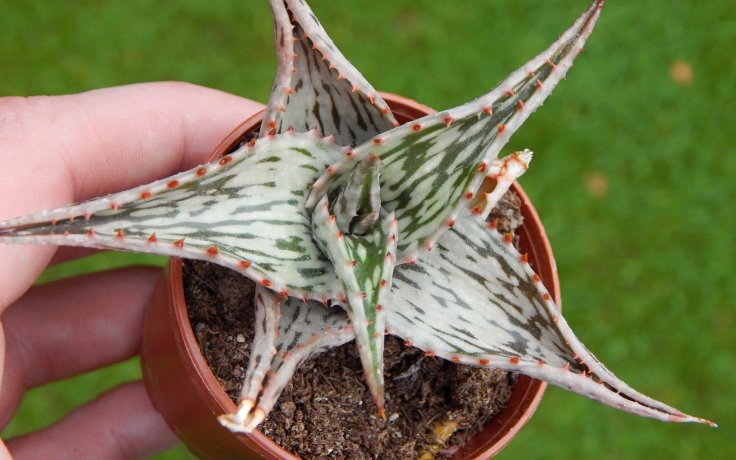
Aloe somaliensis
Ideally, place in partial shade.
Always water a few days after the substrate has dried out. Reduce watering in winter.
It can withstand temperatures as low as -3.9 °C for short periods. However, the plant is not frost-resistant.
The species has a relatively limited range, estimated at around 6,200 km², and is known only from a few isolated populations. It is believed that its range may extend beyond Somalia into Ethiopia.
Aloe somaliensis, commonly known as Somali aloe, is a species with a limited distribution covering approximately 6,200 km² across five known subpopulations. Its range may extend across the border into Ethiopia. In nature, it grows on rocky sandstone slopes and limestone, occurring either singly or in small groups at elevations between about 700 and 1,700 meters above sea level.
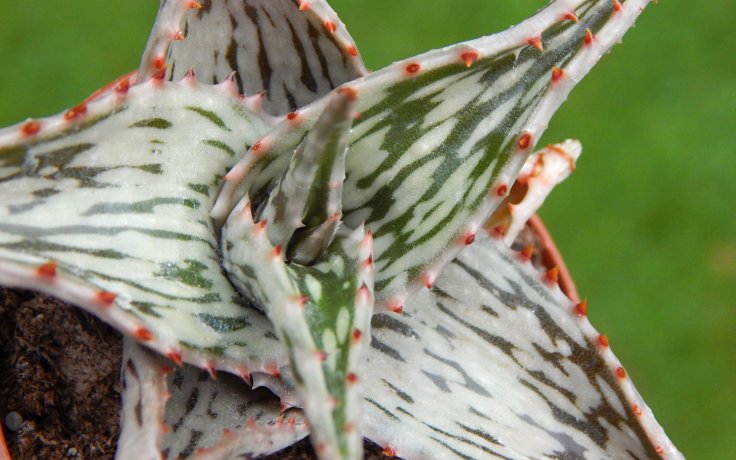
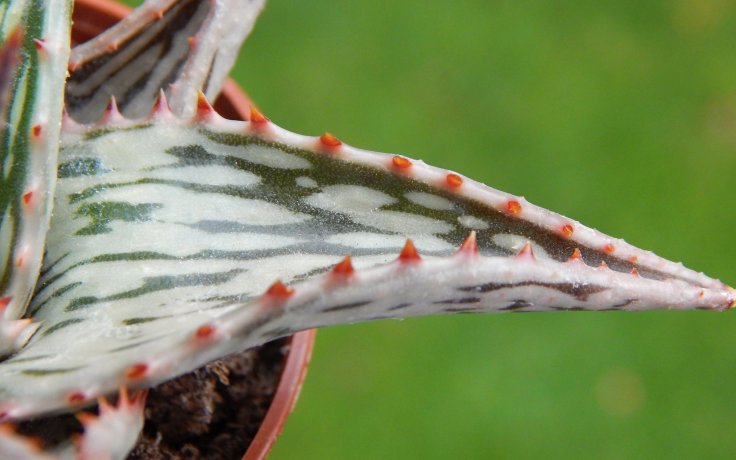
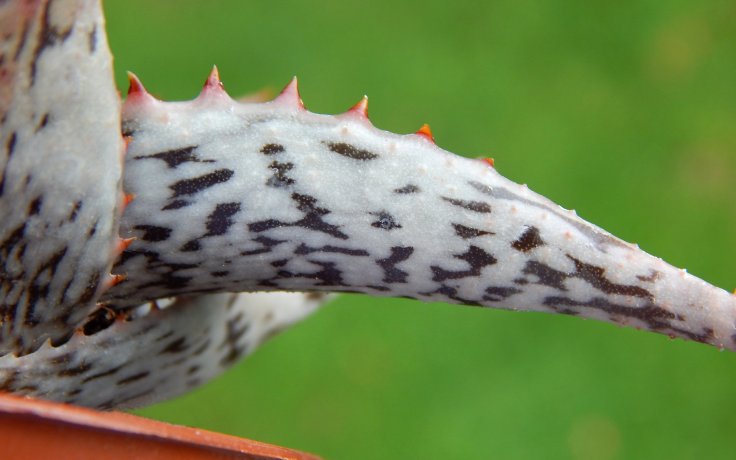
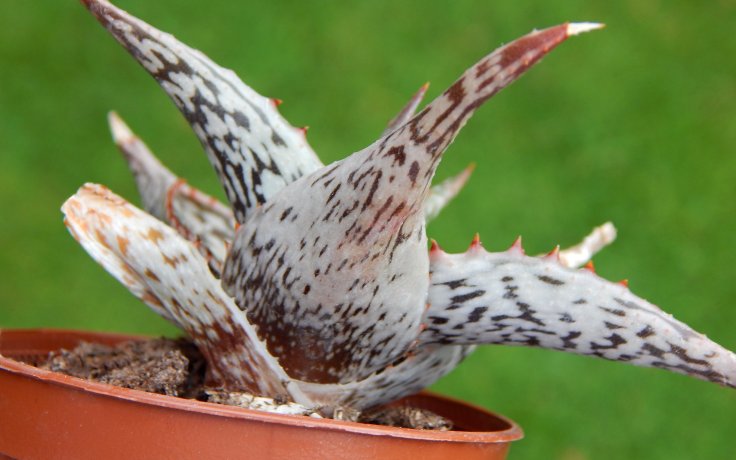
The plant forms stemless or short-stemmed rosettes with broad leaves. The leaves are triangular, green and often tinged with brown, and marked with irregular white patterns. Along the margins, they bear pink to brown spines. Individual leaves can reach up to about 30 cm in length and around 8 cm in width. Aloe somaliensis may grow as a solitary plant or gradually form a small clump with age.
The flowers are tubular, light pink to red in color. They appear in late summer on flowering spikes that can reach a height of up to about 80 cm, rising well above the leaf rosette.
For cultivation, a well-draining substrate and a bright position are suitable. Watering should be moderate, allowing the substrate to dry between waterings. This is a slow-growing succulent that rarely needs repotting, making it a stable and long-term houseplant choice.