- Home
- Succulents
- Aloe
- Aloe millotii
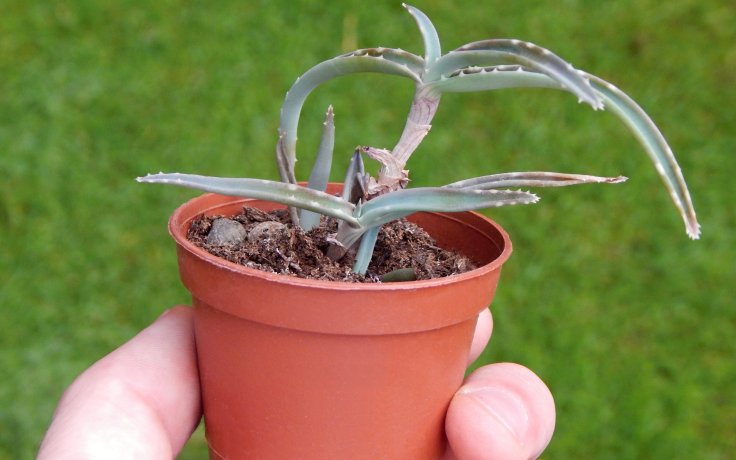
Aloe millotii
The plant likes sunny and semi-shaded locations.
Always water a few days after the substrate has dried out. Reduce watering in winter.
It can tolerate temperatures down to -3.9 °C for short periods. However, the plant is not frost-resistant.
The name Aloe millotii is named after the French botanist and zoologist Millott, whose name has also been immortalized in some Euphorbia and Kalanchoe species.
Aloe millotii comes from the southern part of Madagascar, from the Cap Sainte Marie area, and its name honours Millot, a French botanist and zoologist known for his work on local flora. Among succulents, his name is similarly “commemorated” in a Euphorbia and a Kalanchoe as well, and we have both in our e-shop. In nature it grows on rocky slopes and can survive in harsh conditions, and there are very similar aloes such as Aloe antandroi and Aloe decaryi.
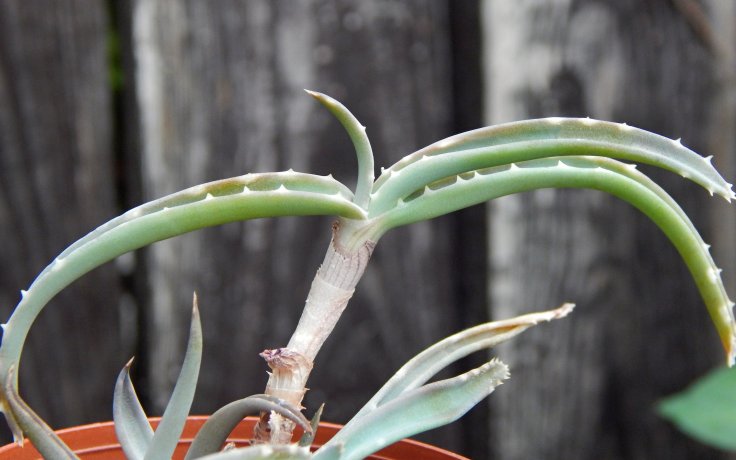
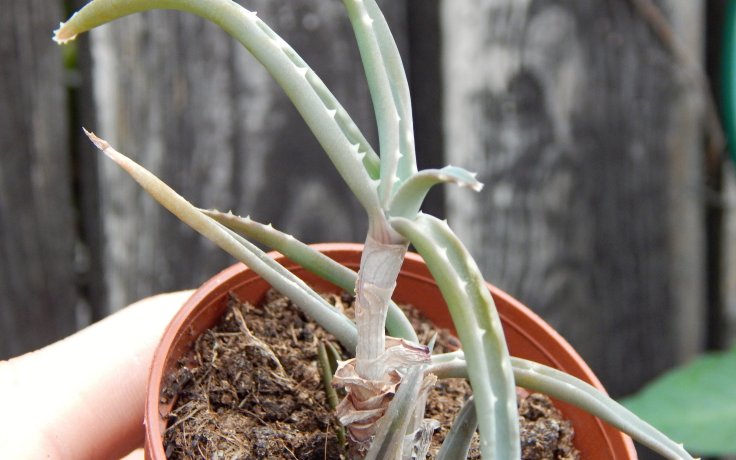
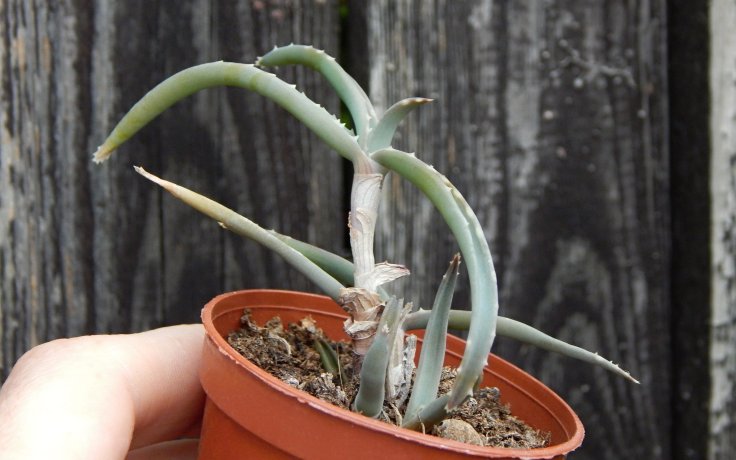
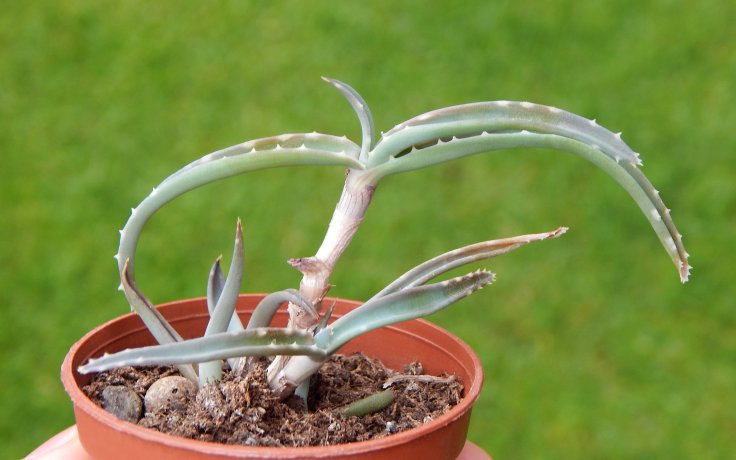
The leaves are long, blue-grey, and finely toothed along the margins. During drought the long leaves develop a more pronounced channelled shape, and the lower leaves may dry out. The plant offsets strongly, forming dense clumps on thin stems that often become trailing with age. It reaches only about 10 cm in height, but the shoots can grow up to around 25 cm long.
The flowers are yellow-orange and appear on flowering stalks. Blooming may occur at different times of the year, most often in spring.
Aloe millotii tolerates long dry periods well, and its overall look is often strongly influenced by how it is grown. A bright position and well-draining soil are recommended, with watering kept rather moderate. It is also reported that the gel from its leaves has properties similar to Aloe vera gel and may be used for skin care. Aloe millotii is an interesting choice for growers looking for a strongly offsetting aloe with blue-grey leaves and a trailing habit.